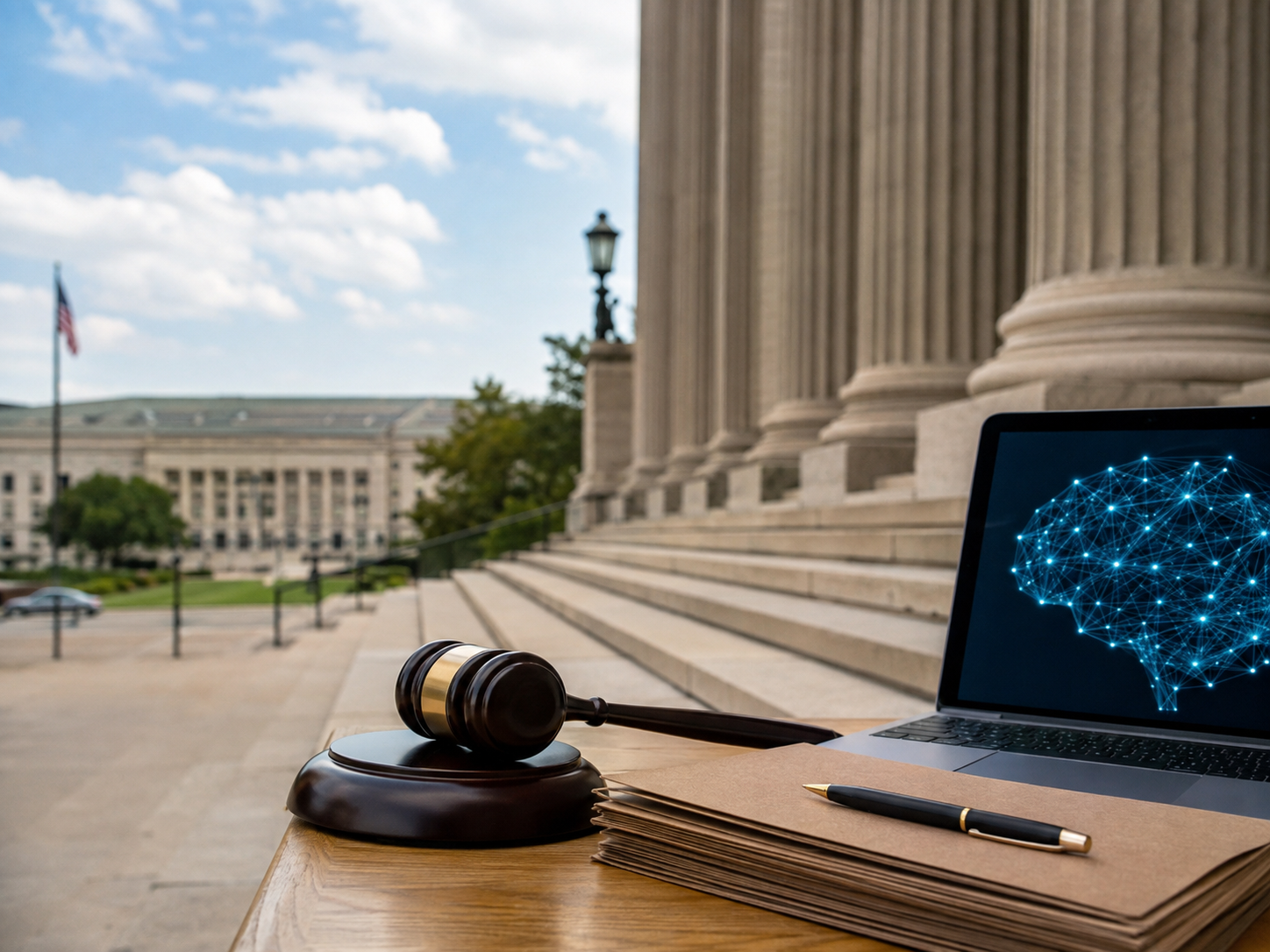


A US federal court has blocked the Pentagon’s designation of artificial intelligence company Anthropic as a national security supply-chain risk, marking a significant development in the evolving relationship between frontier AI developers and the defence sector.¹
The ruling, issued by US District Judge Rita Lin, found that the Department of Defense had acted unlawfully in its decision to designate Anthropic, developer of the Claude AI models, as a supply-chain risk. According to Reuters, the court concluded that the designation amounted to unlawful retaliation and raised both First Amendment and due-process concerns.¹
Rather than closing the door on the use of advanced AI in defence, the decision could provide greater clarity around how governments and technology companies establish safeguards for increasingly capable systems.
AI Safeguards at the Centre of the Dispute
The disagreement between Anthropic and the Pentagon centred on two areas where the company sought restrictions on the use of Claude: mass domestic surveillance and fully autonomous weapons.²
Anthropic has maintained that current frontier AI systems are not sufficiently reliable to independently operate fully autonomous weapons and that unrestricted domestic surveillance raises fundamental rights concerns. At the same time, the company has repeatedly stated that it supports the wider lawful use of AI for US national security.²
Anthropic has also highlighted its existing involvement in the defence ecosystem. The company says Claude became the first frontier AI model deployed within US government classified networks in 2024, demonstrating that its position is not one of opposition to defence applications, but of establishing boundaries around particular uses.²
That distinction could become increasingly important as AI moves beyond administrative and analytical tasks and becomes integrated into intelligence, logistics, cybersecurity, autonomous platforms and other mission-critical systems.
Greater Clarity for Defence AI
The ruling may ultimately contribute to a more defined framework for cooperation between the US government and private AI developers.
AI companies are increasingly being asked to balance rapid technological development with questions surrounding reliability, oversight and acceptable deployment. Defence departments, meanwhile, are seeking access to increasingly capable commercial AI systems while maintaining the flexibility required for national security operations.
Establishing clearer rules around those relationships could support broader adoption by giving technology companies, defence contractors and government agencies a better understanding of where responsibilities and limitations sit.
Anthropic welcomed the court’s decision while emphasising that it still intends to work with the US government on national security applications. The company said it remains focused on working productively with government to ensure that AI can contribute to national security.¹
A Broader Defence Technology Question
The dispute also reflects a much larger shift taking place across the defence technology sector.
Artificial intelligence is becoming an increasingly important component of modern military systems, from intelligence analysis and cyber defence to unmanned platforms and battlefield decision support. As capabilities advance, questions around how much autonomy should be delegated to AI systems are likely to become increasingly important.
For defence technology developers, the outcome highlights the growing importance of technical safeguards, clearly defined operating parameters and transparent procurement frameworks as governments integrate commercial AI into national-security infrastructure.
The court decision does not resolve the wider debate over how AI should be deployed in defence. However, it represents another step toward establishing the legal and operational boundaries that could ultimately support the technology’s responsible adoption at scale.
Sources
- Reuters, US judge blocks Pentagon’s Anthropic blacklisting, August 28, 2026. Reuters article
- Anthropic, Statement on the comments from Secretary of War Pete Hegseth, February 27, 2026. Anthropic statement
Disclaimer
This article is for informational purposes only and is based on publicly available information at the time of publication. It does not constitute legal, financial or investment advice. Readers should conduct their own research and consult appropriate professional advisers before making decisions based on the information contained herein.