

Highlights
• Around 20 existing petrol vehicles have begun a six-month renewable-fuel trial in Spain.
• The vehicles will use 100% renewable petrol without changes to their engines or the country’s existing refuelling infrastructure.
• The pilot will test whether fuel origin, consumption and lifecycle emissions can be tracked accurately enough for regulatory use.
A fleet of existing petrol cars has begun running exclusively on renewable gasoline in Spain as part of a six-month test of whether lower-carbon fuels can be introduced without replacing vehicles or rebuilding refuelling infrastructure.
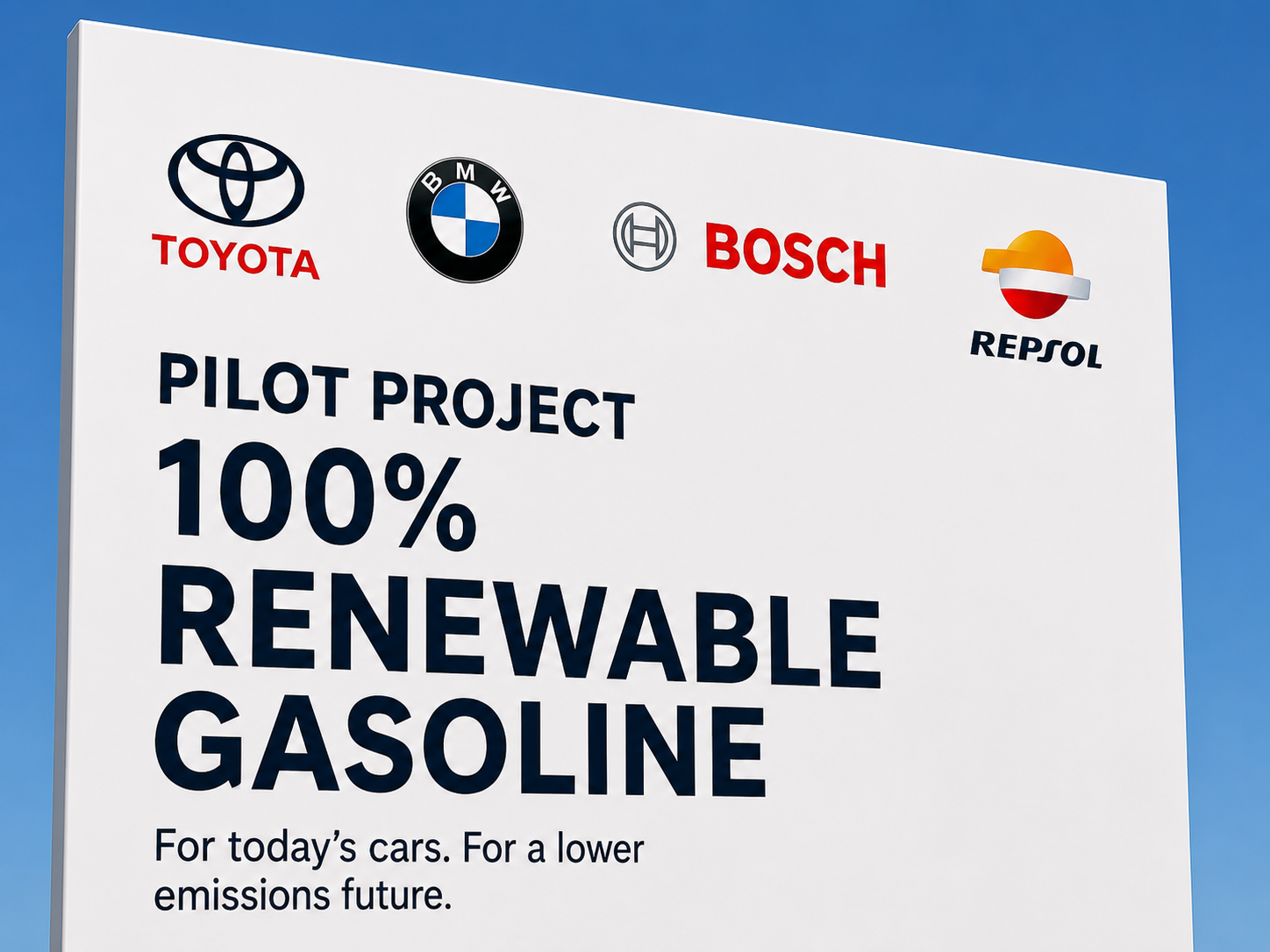
The pilot involves around 20 Toyota, Lexus and BMW vehicles using Nexa 95, a renewable petrol supplied through existing public filling stations. Bosch will digitally record where the fuel came from, how much each vehicle receives and the associated lifecycle carbon footprint.
The immediate technical question appears relatively straightforward: can conventional petrol vehicles operate normally on a renewable alternative?
The broader question is more complicated. The participants want to determine whether renewable fuel can be reliably verified, certified and incorporated into future European transport rules at a time when policymakers are reconsidering how different technologies should contribute to road-transport decarbonisation.
Testing the Existing Vehicle Fleet
The pilot began in early July 2026 and will run for six months under normal driving conditions.
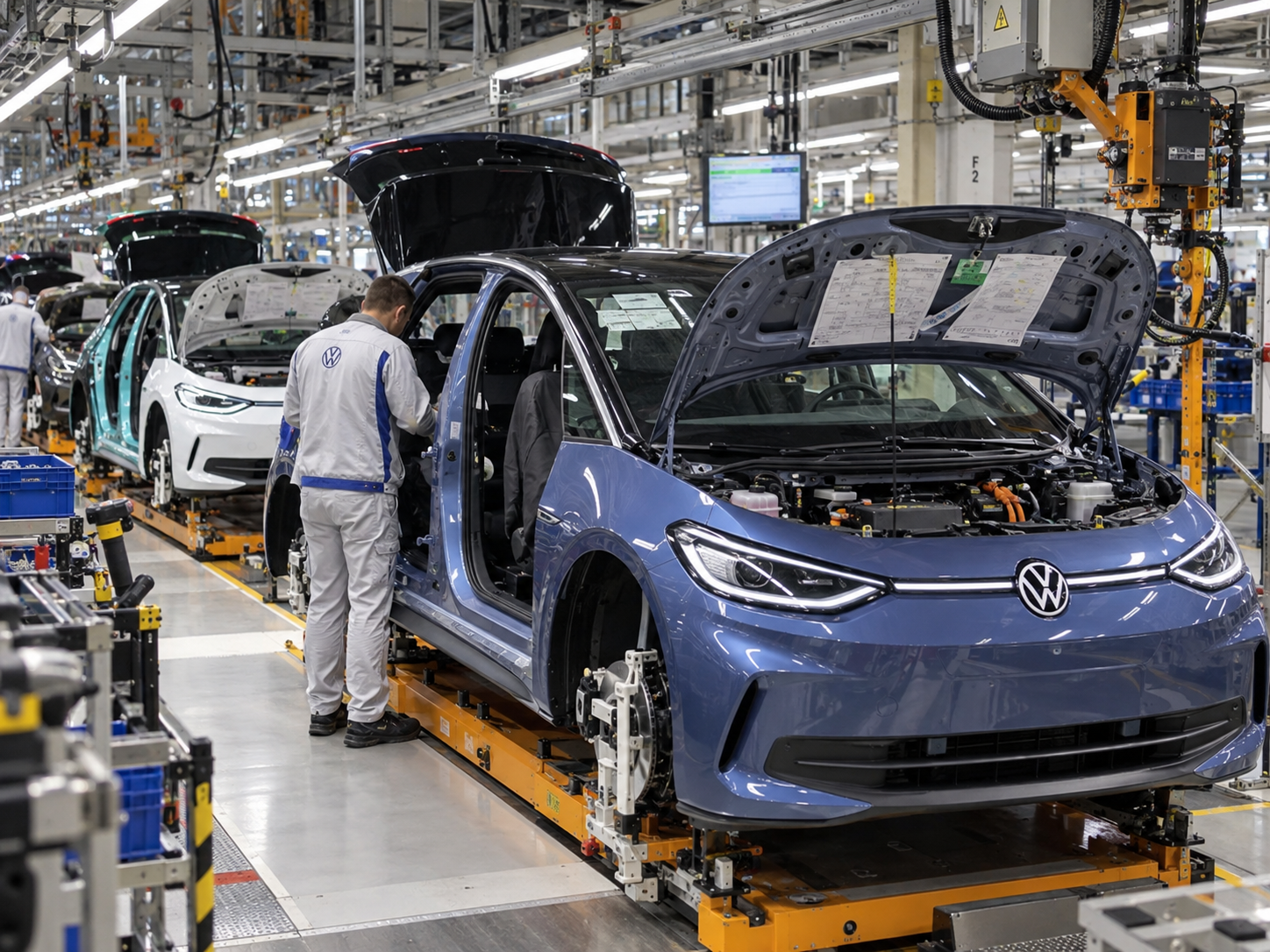
Unlike a prototype vehicle trial, it does not require specially developed engines. The cars involved are existing passenger and fleet vehicles, while the renewable petrol is intended to work with the pumps, storage systems and distribution infrastructure already used for conventional fuel.
That is the central attraction of the approach.
Electric vehicles require charging infrastructure and can involve a higher initial vehicle cost. Renewable petrol could theoretically reduce the lifecycle emissions of vehicles that are already on the road, including cars whose owners are not yet ready or able to replace them.
Europe’s existing vehicle fleet will also remain in use long after the sale of new combustion-powered models begins to decline. A fuel capable of working in those cars could therefore have a role during the transition, particularly in locations where charging infrastructure develops more slowly.
However, compatibility alone does not establish whether renewable petrol can be produced in sufficient quantities or sold at a price acceptable to drivers. The Spanish test involves only around 20 vehicles and one fuel provider, making it an early operational demonstration rather than evidence of widespread commercial availability.
What Makes the Petrol Renewable?
The fuel used in the trial is produced from feedstocks that comply with the European Union’s Renewable Energy Directive.
The project participants say it offers a significant reduction in greenhouse-gas emissions compared with fossil petrol when the entire lifecycle is considered, including the sourcing of raw materials, fuel production, distribution and use in a vehicle.
That lifecycle distinction is important.
Renewable petrol is not the same as a battery-electric powertrain, and “100% renewable” does not mean that nothing comes from the vehicle’s exhaust. Petrol and alternative-fuel engines continue to produce regulated pollutants, while the combustion process releases carbon dioxide.
The environmental argument instead depends on how the fuel is produced and whether the carbon released when it is used is offset by carbon absorbed or avoided elsewhere in its production cycle.
The resulting reduction can therefore vary according to the feedstock, production method, energy source, transport distance and accounting rules. Establishing a credible record of the fuel’s origin is consequently as important as proving that an engine can run on it.
A Digital Record for Every Refuelling
Bosch’s Digital Fuel Twin will collect information from the vehicles, filling stations and fuel-card transactions.
The system is designed to record the fuel’s source, characteristics and quantity before connecting that information with an individual vehicle. It can then calculate the reported carbon footprint and produce documentation for auditing or regulatory reporting.
Without that level of traceability, a vehicle registered as operating exclusively on renewable fuel could still be filled with ordinary petrol.
The trial is therefore testing more than fuel performance. It is also examining whether a digital certification system can provide credible evidence that a particular car has consistently used an eligible renewable product.
This could become particularly relevant if future regulations treat vehicles differently according to the fuel they use. Policymakers would need a way to prevent double counting, verify sustainability claims and confirm that qualifying vehicles were not regularly operating on fossil fuels.
Why Spain Was Selected
Spain was chosen because renewable gasoline is already available through part of the country’s existing fuel network.
Repsol is currently the only supplier offering 100% renewable petrol at public filling stations in Spain, according to the pilot announcement. The project will therefore test the availability of the product alongside vehicle performance and digital certification.
This also illustrates one of the main limitations facing renewable fuels.
A product may be technically compatible with existing engines and pumps, but that does not mean it is available across a national market. Producing enough sustainable feedstock and developing a reliable supply chain could be more difficult than demonstrating that a small fleet can use the fuel successfully.
Renewable raw materials may also be required by aviation, shipping, industrial processes and heavy transport, where electrification can be more challenging. Passenger cars would therefore be competing with other sectors for a potentially limited supply.
The eventual value of renewable petrol will depend not only on whether it works, but on where limited volumes can produce the greatest reduction in emissions.
The EU Policy Debate
The trial is taking place while European transport policy remains in transition.
Current EU legislation sets a 100% reduction target for the average emissions of new cars and vans from 2035, compared with the 2021 baseline. Existing vehicles are not removed from the road under those rules.
In December 2025, the European Commission proposed revising that framework to allow a more technology-neutral approach. The proposal would lower the 2035 tailpipe-emissions reduction target for new cars and vans from 100% to 90%, with the remaining emissions potentially addressed through credits linked to sustainable renewable fuels or low-carbon steel. That proposal was still being examined by EU member states in July 2026 and had not replaced the existing rules.
The companies behind the Spanish pilot intend to provide the resulting data to EU policymakers and automotive representatives.
From their perspective, renewable petrol could complement electric vehicles rather than compete with them, particularly for existing cars, hybrid vehicles and drivers who cannot immediately move to a fully electric model.
For policymakers, the challenge will be deciding whether lifecycle reductions should receive regulatory recognition alongside technologies that produce no carbon dioxide from the exhaust.
What the Trial Can Actually Demonstrate
By the end of the six-month period, the project should provide useful evidence about vehicle operation, refuelling behaviour and digital fuel certification.
It could demonstrate that renewable petrol works as a practical replacement fuel in existing engines and that its movement from production to individual vehicles can be documented.
It will not, by itself, prove that the fuel can be manufactured affordably at national or European scale. Nor will a trial involving around 20 vehicles settle wider questions about feedstock availability, lifecycle calculations or the most efficient use of renewable fuels.
The importance of the project is therefore not that it offers a single alternative to electrification.
It tests whether Europe’s existing petrol vehicles could form part of a broader transition in which emissions are reduced through several routes: replacing vehicles where practical, improving public transport, expanding charging infrastructure and lowering the lifecycle impact of the fuels still being used.
As Europe debates the future of the combustion engine, the Spanish pilot will provide a small but measurable test of whether renewable petrol can move from a technical possibility to a credible part of transport policy.
- https://www.bosch-presse.de/pressportal/de/en/bosch-toyota-bmw-and-repsol-launch-real-world-pilot-of-vehicles-running-on-100-renewable-gasoline-283776.html
- https://newsroom.toyota.eu/toyota-bmw-bosch-and-repsol-launch-a-real-world-pilot-of-vehicles-running-on-100-renewable-gasoline/
- https://www.repsol.com/en/press-room/press-releases/2026/repsol-toyota-bmw-bosch-launch-real-world-pilot-vehicles-running-cent-per-cent-renewable-gasoline/index.cshtml
- https://www.consilium.europa.eu/en/policies/road-transport/
- https://single-market-economy.ec.europa.eu/sectors/automotive-industry/technical-harmonisation/faq-type-approval-vehicles_en