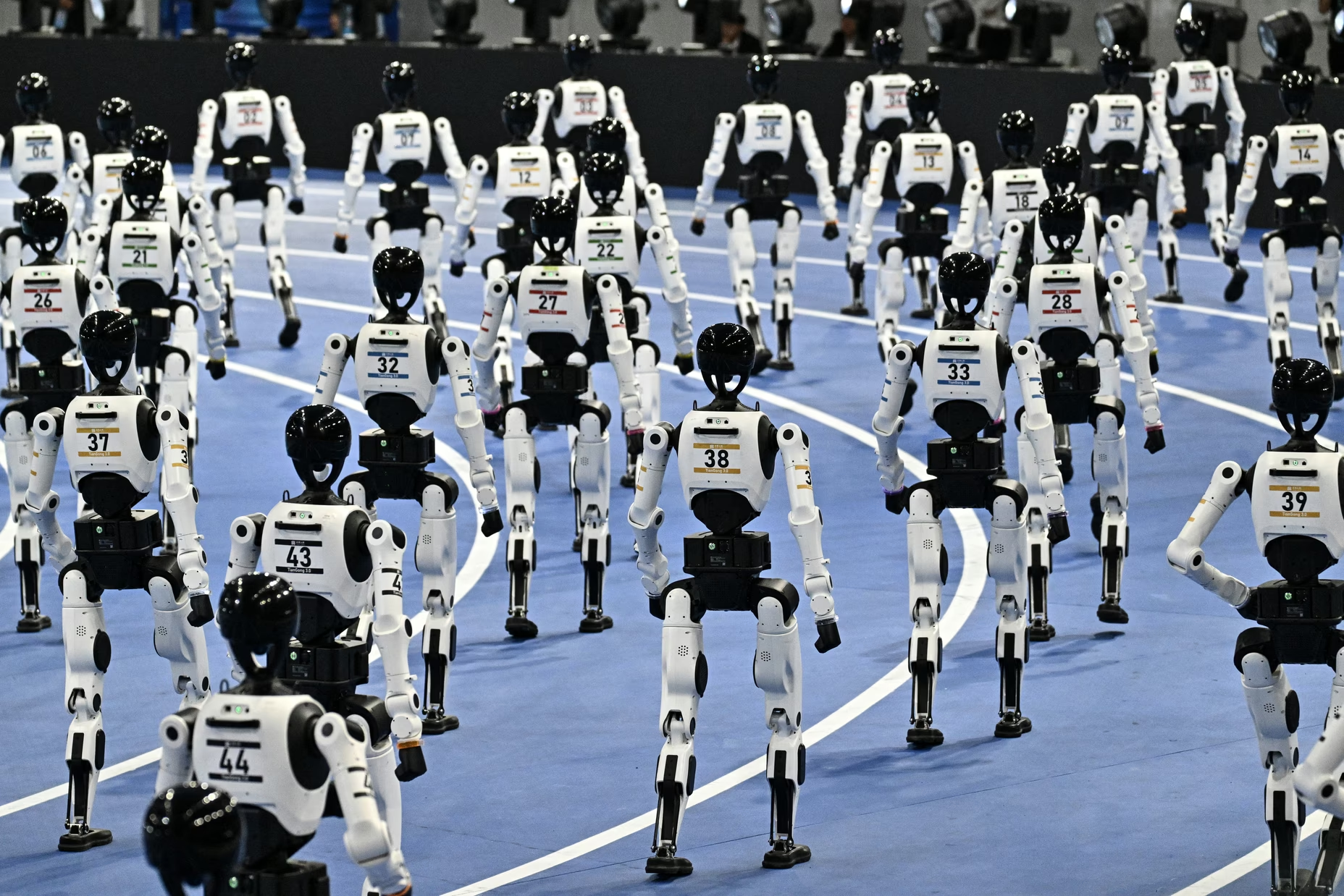


The second World Humanoid Robot Games close in Beijing this week with a rule change that matters more than any of the times posted on the track. Across most competitive events, robots are no longer allowed a human controller. They have to see the course, decide how to move, keep their balance and get up again if they fall, all without anyone steering from the sidelines. Organisers say the five days at the National Speed Skating Oval draw 666 teams and 2,056 robots from 16 countries, roughly four times the field of the first Games in 2025.
Why the operator matters
Removing the person at the controls changes what the competition actually tests. A robot under remote control can show off good hardware, strong motors, light limbs and a stable frame. It says very little about whether the machine understands where it is. An autonomous robot has to handle all of that itself, including the parts that go wrong. Reuters reports that more than 40 per cent of this year's events require fully autonomous operation, citing the technology partner Huawei.
The scale of the programme has grown alongside the rules. Organisers list 51 events and 1,301 matches this year, against 26 events and 487 matches in 2025. Alongside athletics there are scenario tasks drawn from real jobs, including assembly work, logistics, hotel service and hospital care.
The gap between the track and the factory
Last year's Games offered a useful reminder of how hard this is. Robots fell over, collided during the relay and sometimes needed a human to help them up. One observer noted that when a single robot went down in the football, others followed, because none of them could recover independently.
Progress since then is visible, but the harder questions are not settled. Industry reporting through August points to the same three barriers: how much energy these machines use, how consistent their cycle times are, and how much they cost to maintain. A robot that runs a fast 100 metres has not shown it can do the same task, at the same speed, for eight hours a day, next to people, without supervision.
What to watch next
The value of the Beijing event is that it puts these limits in public view rather than in a company demonstration video. Autonomous events fail visibly, and that is more informative than a polished clip.
The next test is whether the same rules migrate from the arena into the workplace. Factory and warehouse trials are already running in several countries, and those settings are far less forgiving than a speed skating oval. If humanoid robots are going to earn a place in industry, the evidence will come from months of ordinary shifts rather than from five days of competition. On current form, that evidence is still being gathered.