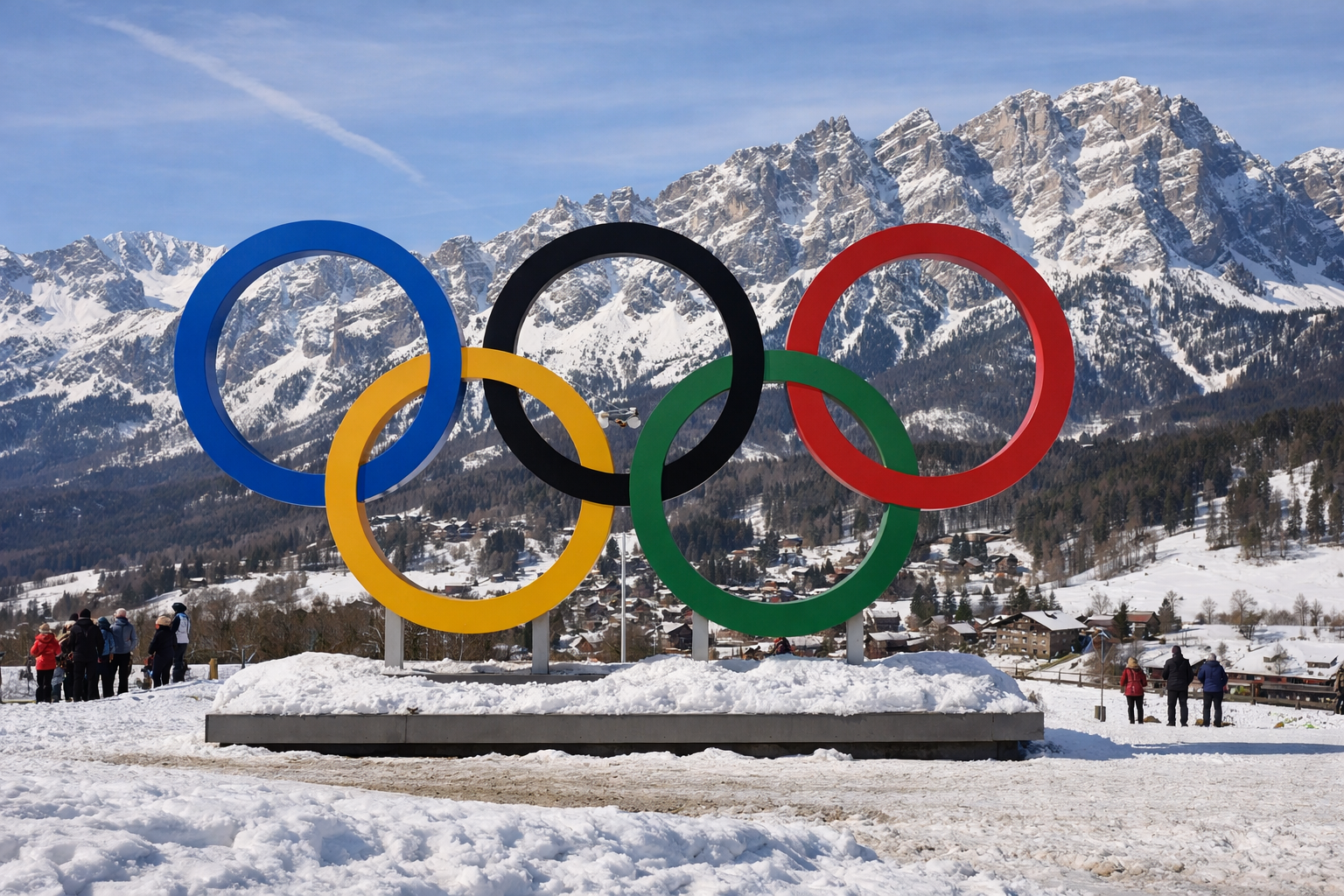


The 2026 Winter Olympics in Milan and Cortina d’Ampezzo are shaping up as more than a fortnight of competition. Organisers and economic analysts project substantial long-term structural effects across northern Italy, aiming to turn the Games into a catalyst for regional development rather than a one-off event.
Independent forecasts suggest that the Milano-Cortina 2026 Winter Olympics will generate around €5.3 billion in total economic value, with approximately €2.3 billion coming from tourism and visitor spending during the event itself. Banca Ifis data indicate that Milan alone could see an injection of more than €1 billion from spectators and related activity, boosting local gross domestic product in 2026.
A dispersed model designed for impact
Unlike traditional single-city Olympics, Milano-Cortina 2026 spreads across multiple hubs — including Milan, Cortina d’Ampezzo, Livigno and Predazzo — a deliberate strategy intended to diffuse economic benefits more broadly. This approach helps limit congestion while routing visitors through alpine and urban destinations alike, increasing nights spent in regions beyond the principal host cities.
Cost and infrastructure planning also emphasise legacy. A key example is the Milan Olympic Village, built as part of the Scalo Romana redevelopment project and designed with long-term community use in mind. After the Games, the complex will be converted into student housing and affordable residential space, adding social infrastructure to the city’s built environment.
Venues such as the Cortina Sliding Centre, constructed specifically for bobsleigh, skeleton and luge events, meet modern international standards and are positioned for future competitions and championships, reinforcing winter sports clusters in the region.
Broader socio-economic effects
Beyond immediate tourism receipts, the Games accelerate broader investment programmes. Upgrades to transport links, health services, public spaces and digital infrastructure are underway in mountain communities and urban centres alike, aligning with regional development plans that pre-date the Olympics but gain momentum through them.
Organisers’ “Impact 2026” procurement programme channels contracts to local, social and small enterprises, supporting skills development and inclusive employment. Around 36,000 jobs are expected to be created through direct and indirect effects of hosting.
For Milan, the economic uplift extends into the future: estimates point to even stronger tourist inflows after the Games, with arrivals in 2026 forecast to outpace national trends in both the city and wider Lombardy region.
Legacy and long-term positioning
The impact of major sporting events in retrospective analyses is often mixed, varying with host strategy and post-event policy. Compared with past Winter Games, Milano-Cortina’s multi-node model and focus on reuse aim to avoid underused facilities and stranded investment.
Whether the economic momentum continues beyond the Games will depend on complementary policies — from tourism marketing to transport and housing strategies — that sustain visitor flows and local business integration.
For northern Italy, the Olympics in 2026 are not just a sporting occasion. They are a structural experiment in dispersing benefits, aligning short-term global attention with long-term regional planning and embedding infrastructure upgrades into a broader growth narrative.