

Scientists have confirmed that all five chemical building blocks of DNA and RNA exist inside a pristine sample from the asteroid Ryugu. The discovery, published on 16 March in Nature Astronomy, adds weight to the idea that the basic ingredients for life may have arrived on Earth from space billions of years ago.
The study was led by Toshiki Koga, a biogeochemist at the Japan Agency for Marine-Earth Science and Technology. His team analysed two samples returned from Ryugu by JAXA's Hayabusa2 spacecraft, which collected material from the asteroid's surface and subsurface before returning to Earth in 2020. The samples were handled in a cleanroom and tested to confirm the molecules were native to the asteroid, not contamination from our planet.
What the Samples Contain
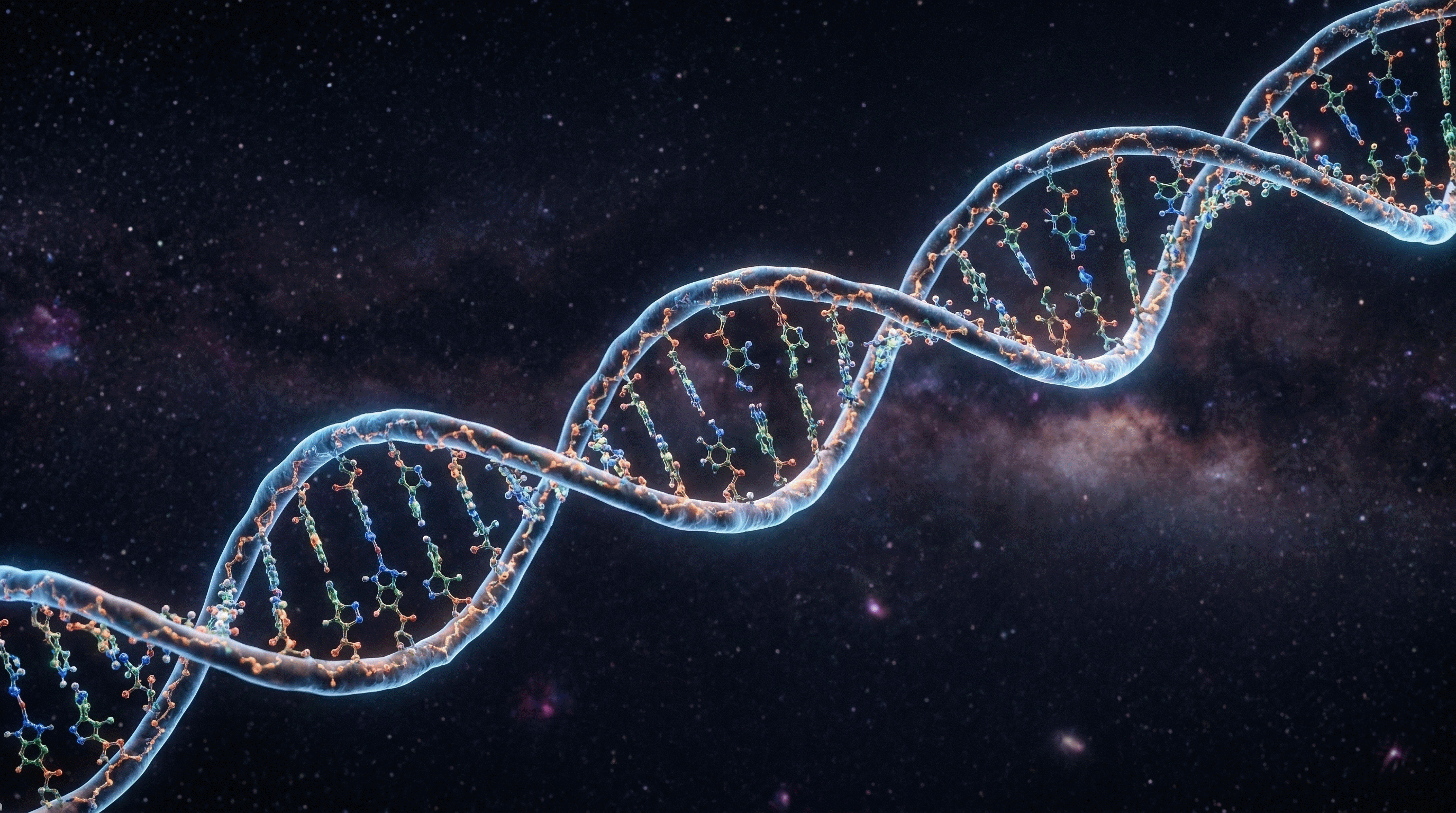
The five molecules detected are called nucleobases: adenine, guanine, cytosine, thymine, and uracil. These are the chemical "letters" that carry genetic instructions in every living thing on Earth. DNA uses four of them, and RNA, which helps convert those instructions into proteins, uses a slightly different set.
Finding all five together in uncontaminated asteroid material is significant. Earlier analysis of Ryugu samples, published in 2023, had detected only uracil. This new study completes the set.
How Ryugu Compares to Other Space Rocks
Researchers compared Ryugu's chemistry with that of asteroid Bennu, sampled by NASA's OSIRIS-REx mission, and two meteorites: Murchison, which landed in Australia in 1969, and Orgueil, recovered in France in 1864. Each rock tells a different story.
Ryugu carries roughly equal amounts of two types of nucleobases, purines and pyrimidines. Bennu and the Orgueil meteorite lean more towards pyrimidines, while Murchison contains more purines. The team also found a consistent relationship between ammonia levels and nucleobase ratios across all the samples, a link that no existing chemical model had predicted.
"Because no known formation mechanism predicts such a relationship, this finding may point to a previously unrecognised pathway for nucleobase formation in early solar system materials," Koga said. It suggests researchers may not yet fully understand how these molecules form in space.
What This Means for the Origin of Life
The study does not claim that life began on asteroids or that Ryugu ever hosted living organisms. What it does is strengthen a long-debated hypothesis: that carbon-rich asteroids, bombarding the young Earth around 4.5 billion years ago, may have delivered some of the raw chemistry that later made life possible.
The key advantage of Hayabusa2's samples is their purity. Meteorites that land on Earth can absorb moisture, air, and biological material during their fall. Ryugu's samples bypassed all of that, giving scientists far greater confidence that what they are examining is genuinely from space.
What Comes Next
Koga's team plans to study a wider range of asteroids and meteorites to better understand how nucleobase ratios vary across the solar system. The Hayabusa2 mission also collected material from just below Ryugu's surface, shielded from solar radiation, and future analysis of that deeper material may yet reveal further surprises.
With JAXA planning further sample-return missions and NASA's Bennu samples still being studied, the coming years should sharpen the picture of how life's essential chemistry first found its way to Earth.