

Highlights
- European quantum startups are advancing toward scalable quantum computing systems.
- France is emerging as a key hub, with multiple companies exploring different qubit technologies.
- New facilities and funding are helping shift the industry from research to real-world deployment.
- Quantum computing could unlock breakthroughs in medicine, materials, and energy systems.
- The global race remains competitive, but Europe is now positioned alongside major players.
Quantum computing has spent years sitting on the edge of possibility. Promising, complex, and just out of reach. That is starting to change.
Across Europe, a growing number of companies are moving beyond theory and into real-world development, building machines, testing systems, and preparing for scale. What was once confined to research labs is beginning to take shape as infrastructure.
From Physics to Practical Systems
At its core, quantum computing is not just about speed. It is about capability.
Instead of processing information in binary, quantum systems use qubits that can exist in multiple states simultaneously. This allows them to explore vast combinations at once, making it possible to tackle problems that traditional computers cannot efficiently solve.
For years, that remained a theoretical advantage.
Now, companies are working to turn it into something usable.
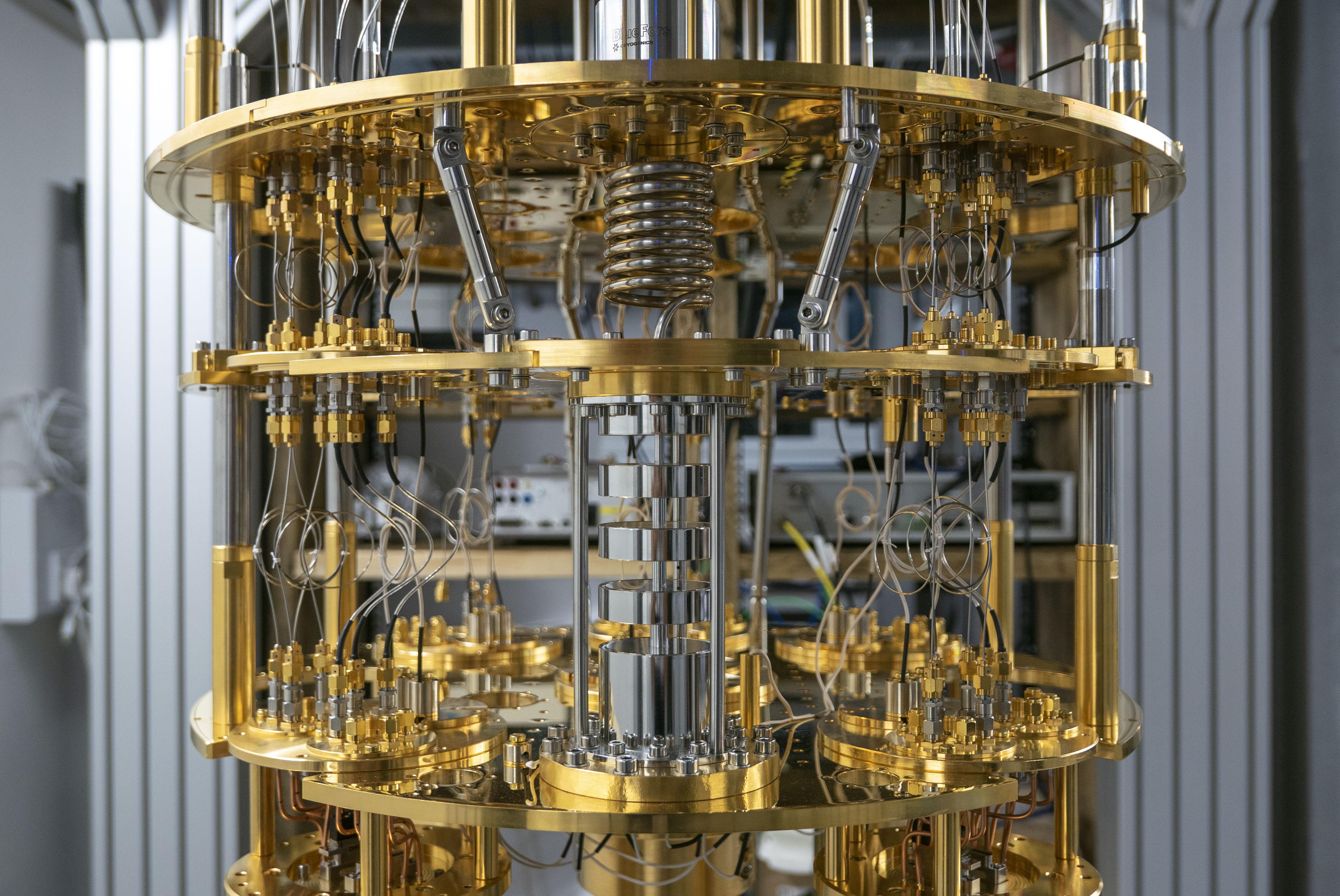
New facilities are being developed across Europe, including specialised environments to test larger systems and manufacture quantum chips. The focus is shifting from proving that quantum computing works to figuring out how to make it reliable.
A Different Kind of Competition
Unlike previous tech cycles, the quantum computing race is still relatively open.
There is no single dominant approach. Different companies are pursuing different methods, from superconducting systems to photonic and error-correcting designs.
In France alone, several companies are working across this spectrum, each taking a different route toward the same goal.
That diversity could be an advantage.
Rather than competing within a fixed framework, the field is still being defined.
The Challenge of Stability
The biggest obstacle remains the same: reliability.
Quantum systems are highly sensitive to their environment. Small disturbances can cause errors, making it difficult to maintain stable calculations over time.
Many approaches attempt to solve this through scale, using large numbers of qubits to correct errors. Others are trying to reduce complexity by designing systems where some of that correction is built in.
Whichever method succeeds, stability will determine how quickly the technology moves forward.
What Happens Next
The next phase is already underway.
Early quantum systems are being connected to high-performance computing environments, allowing researchers to experiment with hybrid models. These systems are not yet delivering transformative results, but they are building familiarity and expertise.
At the same time, companies are preparing for larger deployments, developing facilities that can support more advanced machines.
This shift, from experimentation to application, is where momentum begins to build. If quantum computing reaches scale, the impact could be significant.
It has the potential to change how complex problems are approached, particularly in fields such as drug discovery, materials science, and energy optimisation. Instead of relying on approximation and testing, systems could model outcomes with far greater precision.
That shift would not just improve existing processes. It could redefine them.
A Moment of Opportunity
The global race is intensifying, with strong competition from the United States and Asia.
But this is one of the few areas in modern technology where the outcome is still uncertain.
Europe has the research base, the talent, and a growing ecosystem of companies working toward the same goal. The challenge now is scaling that progress and maintaining momentum. Quantum computing is no longer just a concept being explored. It is becoming something that can be built.
Disclaimer: This article is for informational purposes only and does not constitute financial advice. Always conduct your own research before making investment decisions.