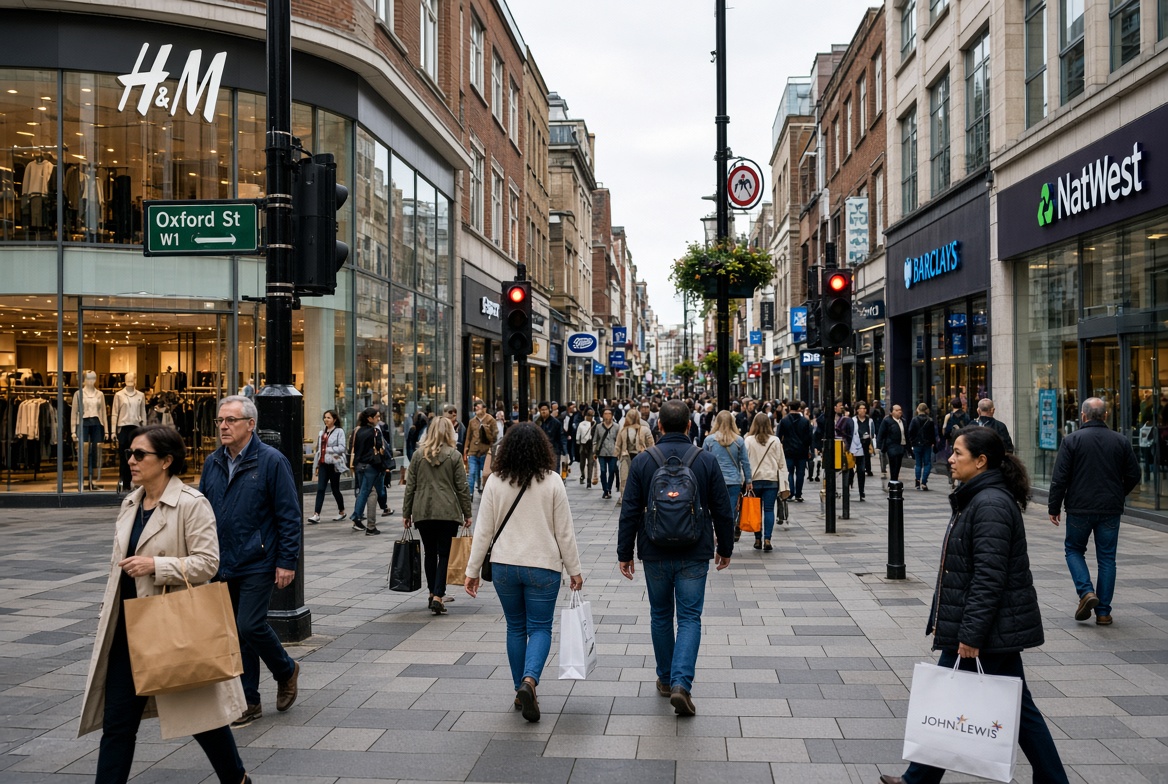


British consumers report their highest level of confidence in two years, yet the latest figures show them buying less. Two sets of data published within 24 hours of each other in late August point in opposite directions, and the gap between them is now one of the more awkward questions facing UK retailers as they plan for the autumn.
The Office for National Statistics reports that retail sales volumes fell 0.5% in July, the first monthly decline since April. Non-food stores fare worst, with clothing retailers and online sellers both losing ground. A day earlier, GfK's long-running confidence index rises three points to minus 14, its best reading since August 2024. Its measure of willingness to make a big purchase reaches the highest level since December 2021.
Two surveys, two moments
Part of the explanation is timing. The sales figures cover July, while GfK questions households at the end of that month and into August. Sentiment may simply be catching up with a run of better than expected economic news, including a change of government and a period of softer energy prices.
Weather and discounting also play a role. Retailers report that hot conditions and fewer summer promotions keep shoppers away from the high street in July, after a stronger June that was itself revised down. That makes the monthly drop look less like a turning point and more like a correction after an unusually active month.
There is a further detail worth noting. GfK's savings index falls even as the headline measure improves, which suggests households are less inclined to put money aside. That can signal either growing comfort or thinner margins at the end of the month. The survey cannot tell the difference, and neither can retailers reading it.
Why confidence is a weak guide to spending
The broader lesson is about how much weight to place on sentiment data at all. Confidence surveys ask people how they feel about the months ahead. They do not measure what sits in household budgets today. When inflation is rising, as it is now after a July increase driven largely by energy costs, optimism about the future can coexist comfortably with caution at the checkout.
For retailers, that distinction carries real cost. Buying teams commit to autumn and Christmas ranges months in advance, often on the strength of forward-looking indicators. Reading an improving confidence score as a demand signal risks leaving stock on shelves and margins under pressure. The exposure is greatest in clothing, furniture and household goods, where purchases are easy to postpone and where discounting is the only reliable way to clear excess.
What the wider picture shows
Investors face a similar problem. Consumer-facing sectors already show some of the sharpest increases in corporate financial distress this year, with leisure, hospitality and food retail among the worst affected. That points to trading conditions on the ground that remain harder than the mood music implies, and to a squeeze that is being felt by suppliers as well as shopfronts.
Uncertainty ahead of the autumn Budget adds another layer. Businesses in these sectors are absorbing higher employment, energy and operational costs while waiting to learn what the government intends to do on tax. Few will commit to hiring or expansion until that picture is clearer.
The test comes this autumn
If the improvement in confidence is genuine and durable, it should begin to show in the August and September sales figures, particularly in big-ticket categories such as furniture and electricals. If it does not, and if energy prices push inflation higher as many analysts expect, the recent lift in sentiment will look more like relief than recovery. Retailers will know which it is well before shoppers do.