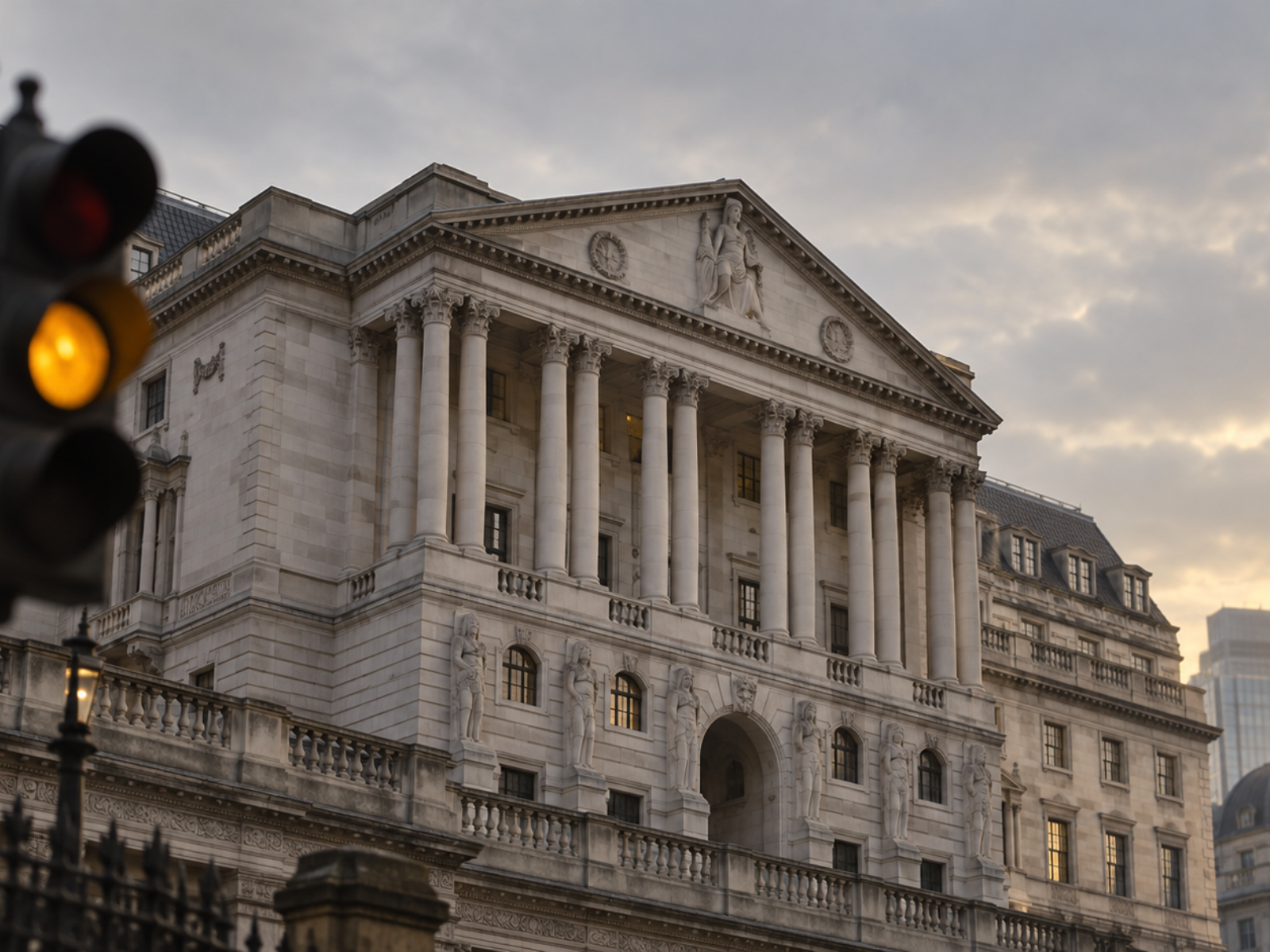


The Bank of England is keeping interest rates on hold, even as the two other big central banks of the Western world raise theirs. Its Monetary Policy Committee (MPC) votes 6–3 to leave Bank Rate at 3.75%, with three members wanting a rise to 4%. The decision comes one day after the US Federal Reserve lifts its rate for the first time since 2023, and one week after the European Central Bank (ECB) does the same. All three face the same problem: high energy prices are pushing up inflation. They are reaching different answers, and that gap now matters for UK borrowers, savers and markets.
Three central banks, one shock
The cause of the pressure is shared. Conflict in the Middle East keeps oil and gas prices high and unstable. The Bank of England's minutes show Brent crude at $106 a barrel in mid-September, with UK wholesale gas prices up 78% since July.
In Washington, the Fed votes 12–0 to raise its main rate to a range of 3.75% to 4%. Most officials expect another rise before the end of the year. Fed Chair Kevin Warsh says inflation is "too high and has been for too long." The decision also puts him at odds with the White House, which wants lower rates.
In Frankfurt, the ECB raises its deposit rate by a quarter point to 2.50%, its second increase of 2026. It warns that inflation in the euro area is likely to stay well above its 2% target for an extended period.
In the UK, inflation reaches 3.1% in August, a five-month high. The Bank expects it to rise to around 3.75% by the end of the year and to go slightly above 4% in early 2027. On those numbers alone, a rate rise looks likely. Yet the majority chooses to wait.
Why the Bank of England waits
The key point is where each central bank starts. At 3.75%, UK rates are already well above the ECB's 2.50%. MPC member Swati Dhingra notes that Bank Rate is materially higher than in other European economies. Alan Taylor, another member, puts the "neutral" rate, the level that neither slows nor speeds up the economy, at around 3%. On that view, UK policy is already restrictive, and the Bank does not need to follow its neighbours to keep pressure on prices.
Markets are also doing some of the work. Traders expect higher rates in future, and lenders pass that on quickly. The Bank reports that the quoted rate on a two-year fixed mortgage is around 0.95 percentage points higher than before the conflict began. For many households, borrowing costs are rising even without a move in Bank Rate.
The majority also sees little evidence so far of "second-round effects". This is the point where higher energy costs lead to bigger pay demands and wider price rises. Food inflation is weaker than expected, and the labour market remains soft, with unemployment at 4.9%.
The case for moving now
The three members who vote for a rise, Megan Greene, Catherine Mann and Huw Pill, see the timing differently. They point out that inflation is set to peak in early 2027, just as many firms and workers agree their pay for the year ahead. If people expect high inflation at that moment, it can become fixed in wages.
They also argue that spare capacity in the economy may have already peaked, since growth is stronger than forecast. Greene warns that the Bank cannot rely on market expectations to do its job. For this group, a small rise now is cheaper than a larger one later.
Governor Andrew Bailey sits between the two camps. He votes to hold, but warns that if the conflict continues for a long period, policy may have to tighten.
What comes next
The next decisions arrive close together. The ECB meets again at the end of October, and the Bank of England announces its next decision on 5 November. Fed officials already point to one more rise this year.
For the UK, the question is less about keeping pace with other countries and more about timing. If energy prices stay high and pay settlements start to climb, the case for a rise in November grows stronger. If prices ease, the Bank's patience may look well judged.
Several factors will shape the choice. They include the Ofgem energy price cap, which rises to £1,723 from October, the next inflation data, and early signs from the 2027 pay round. For now, the Bank of England is betting that the rise in borrowing costs already under way is enough.