

Key Highlights
- Institutional leaders highlighted growing momentum for tokenized assets at the World Economic Forum
- Stablecoins were discussed as a practical bridge between traditional systems and blockchain rails
- Business executives emphasised tokenization’s potential to improve cost efficiency and broaden market participation
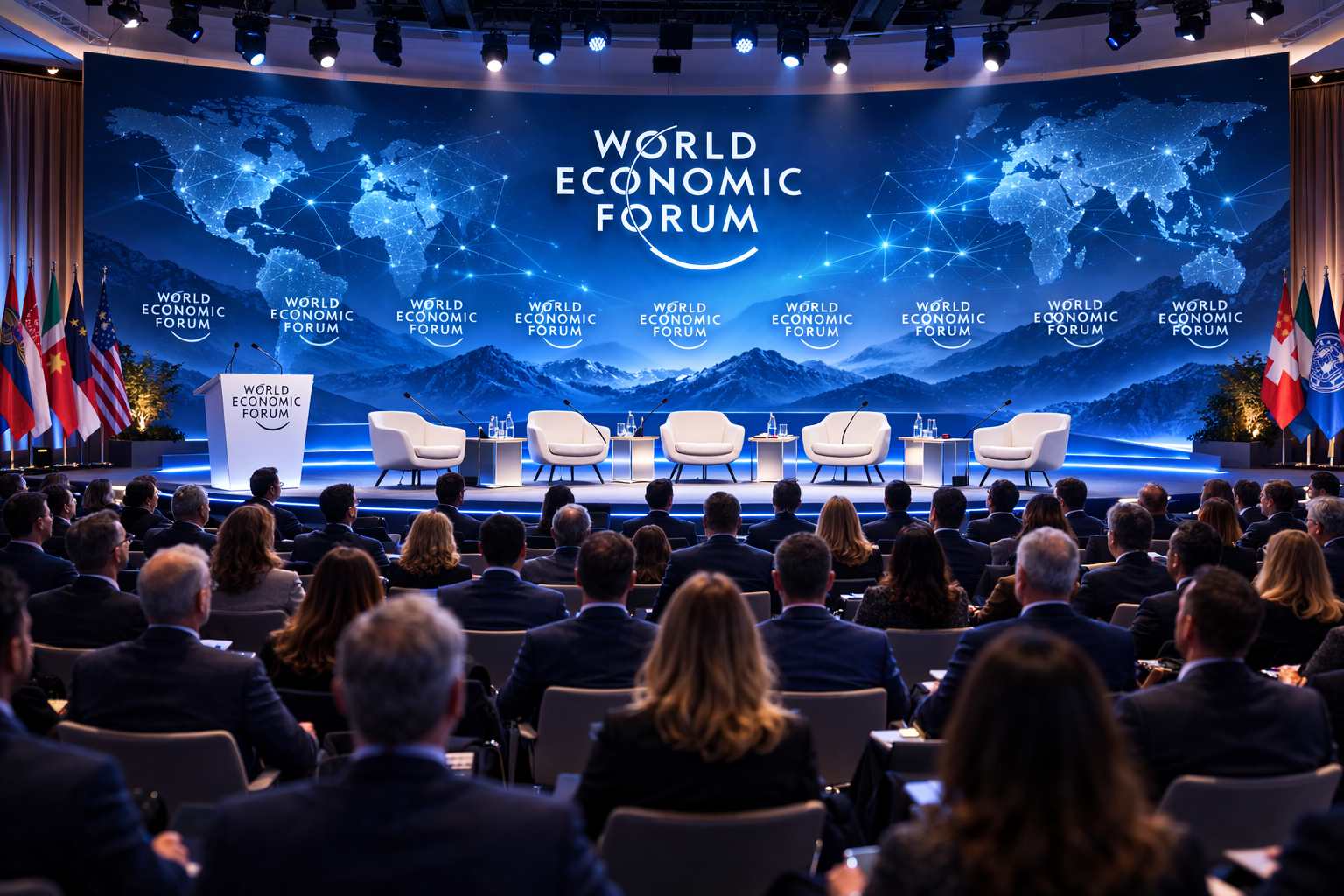
At the World Economic Forum Annual Meeting in Davos this January, tokenization — the on-chain representation of traditional assets such as funds, bonds and securities — took centre stage in discussions on the future of financial market infrastructure.
Panels and informal remarks from business leaders reflected a shift from debate over digital assets’ legitimacy toward conversations about how tokenization might integrate into existing capital markets and operational workflows.
Institutional Leaders Voice Support
Among the most-cited remarks in Davos 2026 coverage was BlackRock CEO Larry Fink’s endorsement of tokenization as a tool for efficiency and access. Fink said tokenization could “reduce fees” and “do more democratisation” by lowering barriers to participation in financial markets.¹
His comments captured a broader theme at the forum: that distributed ledger technology may help address legacy system inefficiencies rather than simply serve as a niche vehicle for speculative trading.
Supporting this perspective, Euroclear CEO Valérie Urbain framed tokenization as an evolution of existing markets rather than a disruption. Urbain told attendees that tokenized assets can “reach out to a bigger range of investors” while “reducing the time to market” and lowering issuance costs for asset managers and issuers.²
These remarks underscore a pragmatic framing at Davos: tokenization was discussed in operational terms, with an emphasis on measurable benefits like cost reduction and improved settlement efficiency.
Stablecoins as Practical Infrastructure
Stablecoins, a subset of digital assets pegged to fiat currency, were frequently referenced in relation to tokenization.
Panel discussions highlighted stablecoins as a working example of digital financial infrastructure that already supports near-instant transfer of value. In Davos sessions, stablecoins were described as one of the first scaled digital asset use cases that could integrate with settlement systems and cross-border payments.³
Rather than being positioned as speculative instruments, stablecoins were discussed in the context of interoperability with traditional rails, signalling that some institutional participants now view them through a practical, infrastructure-oriented lens.³
Shifting Narrative: From ‘If’ to ‘How’
Coverage of Davos 2026 reflected a noticeable narrative shift compared with previous years. Instead of debating whether tokenization and digital assets belong in the financial system, discussions focused on how they could be implemented within existing regulatory and operational frameworks.⁴
This was evidenced by the inclusion of dedicated sessions such as “Is Tokenization the Future?” on the official agenda — a sign that digital asset topics are now treated as substantive and performance-oriented rather than peripheral.
Speakers from both traditional finance and digital asset firms participated, signalling greater convergence between legacy institutions and blockchain innovators.
Institutional commentary at Davos emphasised efficiency improvements as a rationale for adopting tokenized structures.
For example, automation of settlement processes using distributed ledger technology has been cited by panelists as a way to reduce reconciliation costs and streamline post-trade workflows.³ By embedding certain financial functions on-chain, firms may be able to shorten settlement cycles and reduce counterparty risk.
Although regulatory clarity remains central to broader adoption, the prevailing sentiment among Davos speakers was that practical infrastructure use cases — rather than abstract debate — are now driving institutional interest in tokenization.
A Measured Institutional Outlook
The comments from business leaders at Davos reflect measured institutional interest in tokenization and related digital finance infrastructure. Rather than positioning tokenization as a wholesale replacement for existing systems, speakers emphasised complementary enhancements that could work alongside established market structures.
For institutions, the Davos dialogue suggests a focus on controlled experimentation and pilot programs where tokenized assets may deliver measurable operational and cost-efficiency benefits — provided regulatory frameworks evolve in parallel.
Disclaimer: This article is for informational purposes only and does not constitute financial advice. Always conduct your own research before making investment decisions.
Sources
¹ https://www.dlnews.com/articles/people-culture/why-blackrocks-larry-fink-wants-the-entire-financial-system-on-one-common-blockchain/
² https://www.pymnts.com/cryptocurrency/2026/davos-power-brokers-say-tokenization-is-finally-working/
³ https://www.weforum.org/stories/2026/01/new-foundation-global-finance-dialogue-between-banks-and-blockchains/
⁴ https://www.financemagnates.com/cryptocurrency/davos-2026-crypto-debate-shifts-from-if-to-how-as-tokenization-and-stablecoins-take-center-stage/