

Scientists have observed electrons in graphene moving like a nearly frictionless liquid, breaking a law of physics that has stood for over 150 years. The finding, reported on 15 April 2026 by researchers at the Indian Institute of Science (IISc) in Bengaluru working with collaborators at Japan's National Institute for Materials Science, is published in the journal Nature Physics. It marks a significant moment for materials science and raises new possibilities for next-generation electronics and quantum sensors.
A Law of Physics, Broken
The law in question is the Wiedemann-Franz law, a principle established in the nineteenth century that links how well a metal conducts electricity to how well it conducts heat. In most materials, the two properties rise and fall together in a predictable way. In the IISc team's graphene samples, they found a deviation from this law of more than 200 times, at low temperatures. Electrical and thermal conductivity moved in opposite directions. As one increased, the other fell.
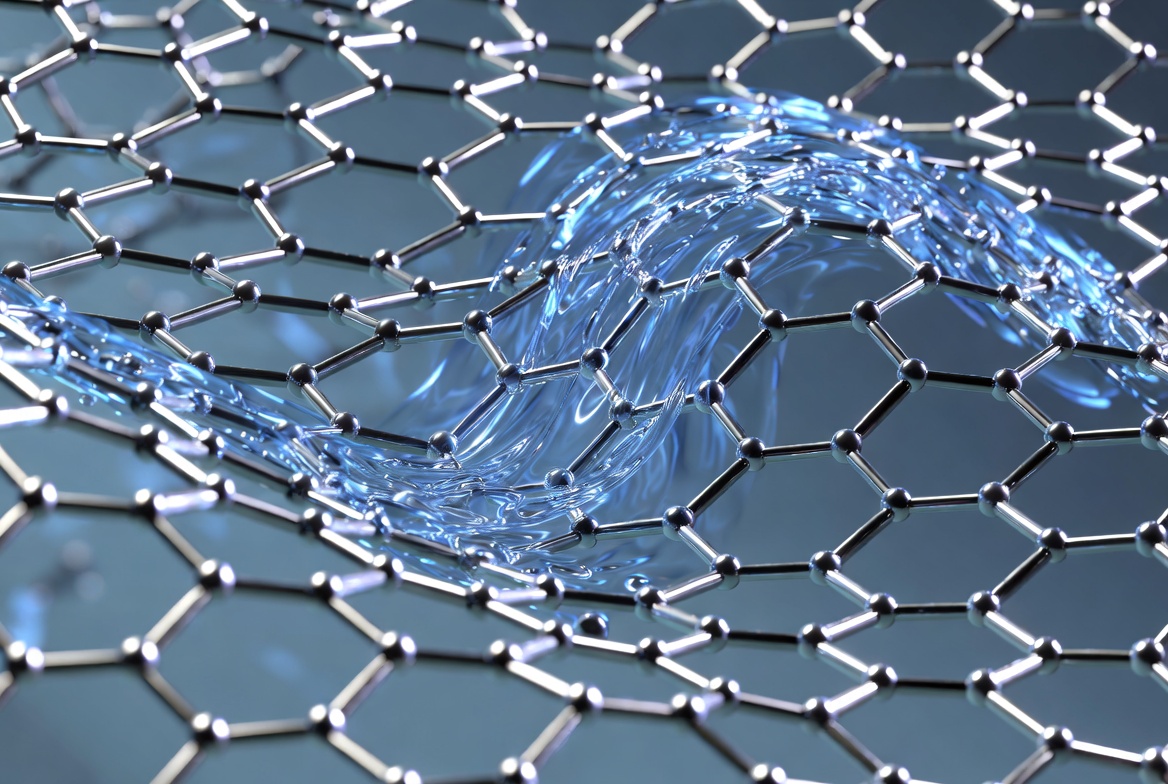
The team achieved this by engineering ultraclean graphene samples, free from the atomic defects that normally mask these effects, and by tuning the number of electrons in the material to reach what physicists call the Dirac point. At this precise condition, graphene sits at the boundary between being a metal and an insulator. Electrons stop behaving as individual particles. Instead, they move together as a collective fluid, roughly 100 times less viscous than water.
What Is a Dirac Fluid?
This collective state has a name: a Dirac fluid. It is an exotic form of matter in which electrons behave according to rules normally associated with high-energy particle physics. The researchers note that it closely resembles the quark-gluon plasma studied in particle accelerators at CERN, the behaviour of which is typically only observable in extreme laboratory conditions. Graphene, a material made from a single layer of carbon atoms, now offers a way to study these phenomena on a laboratory bench.
Despite the unusual behaviour, the team found that both charge and heat transport in this state follow a universal constant, the quantum of conductance, which does not depend on the specific properties of the material. This gives the result mathematical regularity beneath the apparent rule-breaking.
From Laboratory Bench to Practical Use
The near-term applications are focused rather than wide-ranging. The presence of a Dirac fluid in graphene opens a pathway toward quantum sensors capable of detecting extremely weak electrical signals and faint magnetic fields. These would be valuable in precision scientific instruments and in advanced medical diagnostics, where sensitivity to tiny signals matters greatly.
The research is still at the fundamental stage. The conditions required, including very low temperatures and exceptionally pure samples, are not yet practical outside a specialist laboratory. The paper is careful to frame its findings as a contribution to basic science.
Still, graphene continues to reward study. As Professor Arindam Ghosh of IISc observes, there is still much to discover from a single layer of carbon atoms, even two decades after the material was first isolated. This latest result suggests that discovery is far from over.