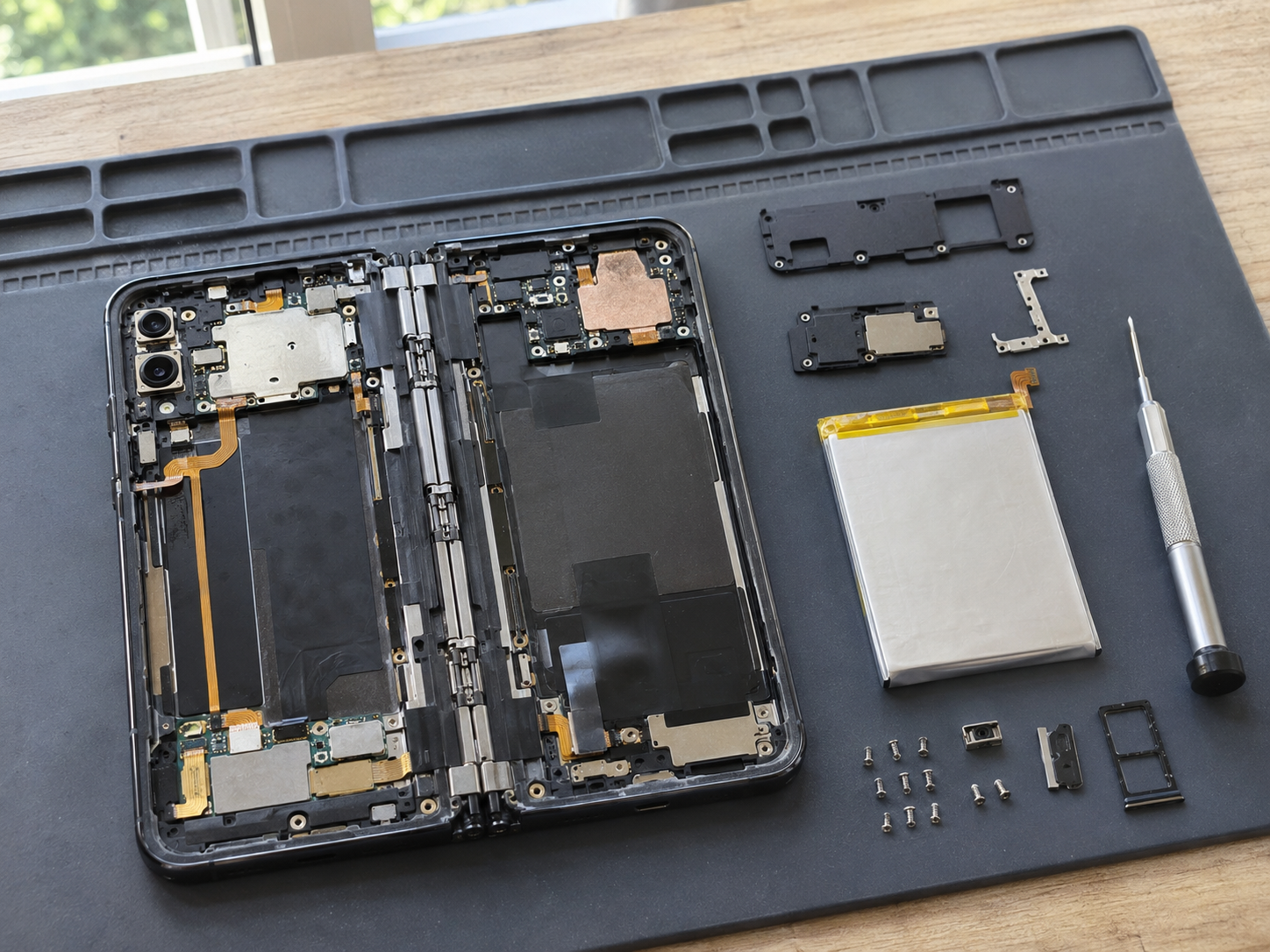


Apple's first foldable phone, the iPhone Duo, is barely a month old, and owners can already fix it themselves. On 17 November, Apple adds the device to its Self Service Repair Store, which sells genuine parts, tools and repair manuals to owners and independent repair shops in the US, Canada and Europe, including the UK. The parts arrive just 25 days after the phone goes on sale, the fastest Apple has managed so far. On its own, this is a small update to an online shop. Alongside other developments this month, however, it points to a wider change: repair is becoming a normal part of owning a phone rather than a specialist interest.
A foldable you can fix
Foldable phones have a reputation as the hardest smartphones to repair. They combine a flexible inner screen, a complex hinge and tightly packed parts. The Duo is not an exception, but it is a step forward. When the repair specialist iFixit takes one apart in October, it gives the phone a provisional score of 5 out of 10, the highest it has given any foldable. It praises the batteries, which use an adhesive that releases with a small electric current, so they come out without bending or prying. It also notes that the outer screen comes away in one piece.
The inner screen remains the weak point. iFixit describes replacing it as delicate work, even with Apple's own equipment, and Apple's out-of-warranty price for a damaged inner display in the US is $999. Smaller jobs, such as a new battery, are far more manageable. Apple also publishes step-by-step repair manuals on the day the phone launches, so owners and repair shops have the instructions from the start rather than months later.
Repair comes to the customer
Apple is not the only company putting more effort into repair. On 18 November, Samsung reports that its on-demand repair service completes more than 50,000 repairs in its first 18 months. The service runs in 12 European countries, including the UK. A van fitted out as a workshop drives to a customer's home, office or another convenient spot, and a certified technician fixes the phone on site using original Samsung parts. The idea is simple: if repair is easy, more people choose it.
Software is changing too. A phone can stop being useful long before its hardware fails, because it stops receiving security updates. In 2022, a promise of four years of Android updates is seen as generous. Google and Samsung now promise seven years for their recent flagship models, and Motorola joins them with its new Signature 27, which opens for pre-orders in the US on 19 November with a promise of up to seven years. Longer support means a repaired phone stays safe to use for longer, which makes the repair itself more worthwhile.
Rules push in the same direction
Regulation adds further pressure, especially in Europe. The EU's Right to Repair Directive applies from 31 July 2026. It gives consumers the right to ask manufacturers to repair products that are technically repairable under EU law, for free or at a reasonable price. Separate EU rules for smartphones, in force since June 2025, already require repairability labels, access to spare parts and longer software support. On 3 November, the European Commission also opens a public consultation on repair requirements for more products, including wearables, e-bikes and small kitchen appliances. It runs until 9 February 2027.
The rules do not yet work perfectly. Only a handful of EU countries meet the deadline to bring the directive into national law, and cost remains the biggest barrier. The European consumer group BEUC finds that a flagship smartphone screen can cost more than €400, around 30% of the phone's price, before labour is added. Faced with bills like that, many people still decide that replacing a device is simpler than fixing it.
Outlook
Even so, the direction is clear. Repair parts arrive faster, repair services come to the customer, and phones receive updates for longer. Each change on its own is modest. Together, they make keeping a phone for longer a practical choice for more people, not only for enthusiasts with a screwdriver.
The next test is price. Parts and labour that cost close to the price of a new device do little to change behaviour, and campaigners in Europe are already calling for limits on what manufacturers charge for spare parts. For now, the iPhone Duo shows how quickly the industry can move when repair is part of the plan from the first day. For owners, a cracked screen or a tired battery is becoming less likely to mean the end of the phone.