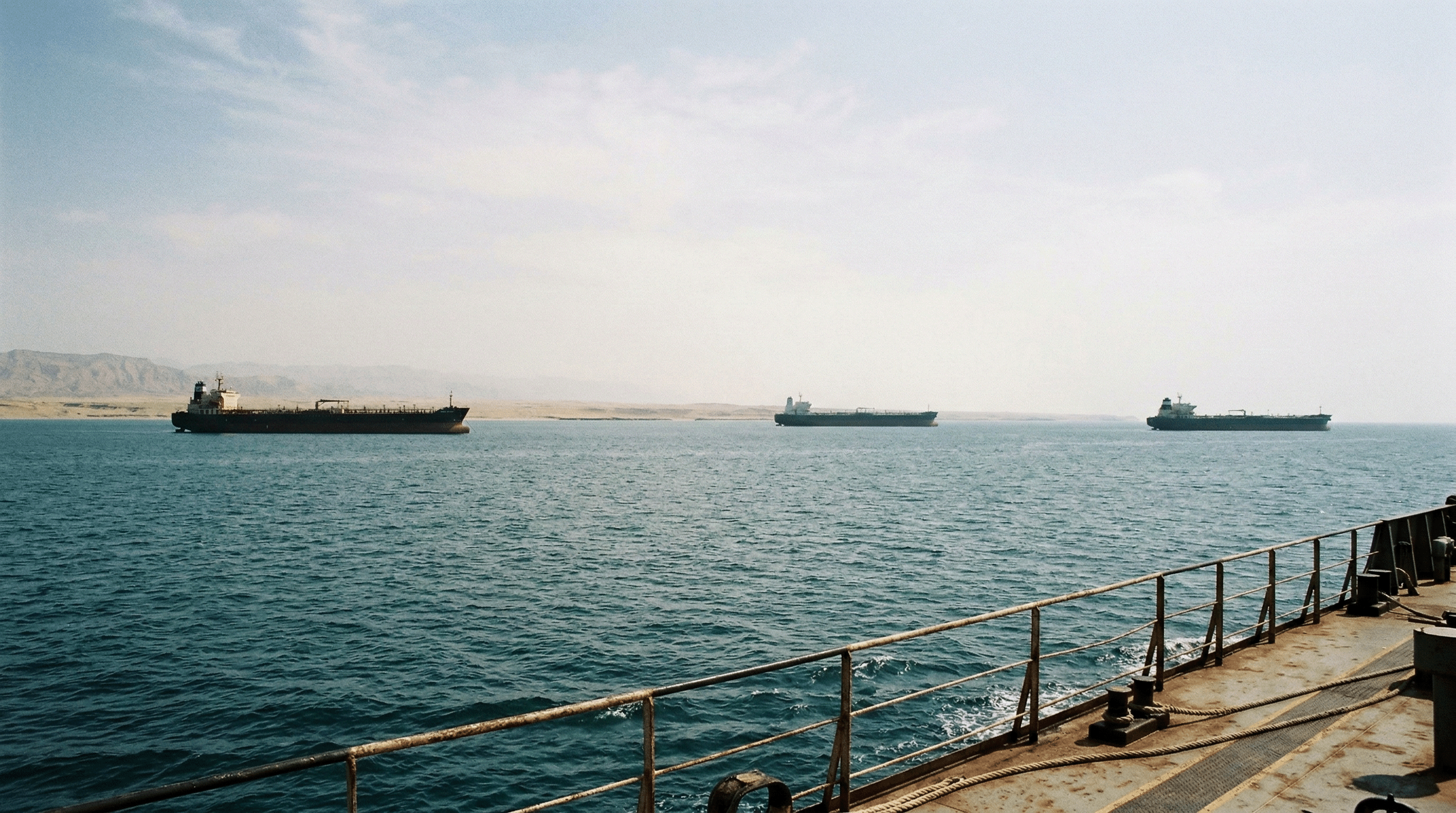


Global oil markets are now responding to the most serious disruption to Middle East energy supply since the 1970s. Following coordinated US and Israeli military strikes on Iran on 28 February 2026, the Strait of Hormuz has effectively closed to commercial shipping, putting roughly 20 per cent of the world's daily oil supply in jeopardy. With Brent crude reaching $85.41 per barrel by 5 March and forecasters warning of $100 or beyond, governments, energy agencies and shipping insurers are all reassessing the stability of global supply chains.
A Chokepoint Under Pressure
The Strait of Hormuz, the narrow waterway between Iran and Oman that connects the Persian Gulf to the open ocean, handles approximately 20 million barrels of oil per day, according to the US Energy Information Administration. It also carries around 20 per cent of global liquefied natural gas trade, the majority of which flows to Asian markets.
Since the launch of Operation Epic Fury, commercial tanker transits through the strait have fallen to near zero. Vessel tracking data from Kpler and Vortexa show that crude tanker movements dropped from an average of 24 per day in January to just four vessels on 1 March, three of which were Iranian-flagged. By 2 March, a senior official in Iran's Islamic Revolutionary Guard Corps formally confirmed the strait was closed, warning that any vessel attempting passage would be treated as a legitimate military target. At least five tankers have since been struck.
The result is not a formal blockade but something that functions like one. Insurance underwriters are withdrawing protection and indemnity cover. War-risk premiums have risen from 0.125 per cent to between 0.2 and 0.4 per cent of vessel insurance value per transit. For a very large crude carrier, that represents an increase of around a quarter of a million dollars per journey. Approximately 200 internationally trading crude and product tankers are now effectively stranded in the Gulf, according to Lloyd's List Intelligence.
Market Pressures and the Price Trajectory
The price response has been sharp and sustained. Brent crude opened the week of 2 March in the $85 to $90 range, up from approximately $73 per barrel at Friday's close before the strikes. By 5 March, WTI had settled at $81.01 per barrel, an 8.5 per cent single-session gain, while Brent climbed to $85.41. European natural gas futures, measured by the Dutch TTF benchmark, surged from around 30 euros per megawatt hour the previous week to above 60 euros per megawatt hour on 3 March, before easing slightly following reports that Iran had made preliminary contact with US and Israeli officials.
Goldman Sachs has revised its second-quarter Brent forecast upward by $10, to $76 per barrel, based on a scenario of five days of severely reduced Hormuz exports followed by a gradual month-long recovery. The bank warns that five weeks of disruption could push Brent to $100. Analysts at Wood Mackenzie are considering scenarios in which prices reach $150 if the strait remains closed for an extended period. Barclays and UBS have both signalled that $120 per barrel is possible if Gulf energy infrastructure continues to be targeted.
OPEC Plus retains approximately 3.5 million barrels per day of spare capacity, concentrated in Saudi Arabia and the UAE. However, a significant portion of that capacity cannot reach global markets while the strait remains inaccessible. Saudi Arabia's East-West Pipeline and the UAE's Fujairah pipeline offer partial bypass routes, but combined capacity falls well short of what normally transits Hormuz daily. Iran's retaliatory strikes have already targeted storage facilities at Fujairah and a fuel terminal at Oman's Duqm port, placing even those alternatives under threat.
Geopolitical Implications for Energy Supply
Asian economies are the most exposed. According to the US Energy Information Administration, 84 per cent of crude oil and condensate transiting the strait in 2024 was destined for Asian markets. China, India, Japan and South Korea together account for roughly 70 per cent of total flows. India, which sources approximately half of its crude imports through the strait, has activated contingency plans and is moving to deepen reliance on Russian supply. China, which has moderated its intake of Russian crude in recent months under US pressure, is expected to reverse that position quickly if the disruption extends beyond a few weeks.
This dynamic carries strategic implications well beyond the immediate price shock. Russia stands to benefit directly from any sustained rerouting of Asian crude demand. With Middle Eastern barrels facing logistical disruption, Russian exporters are well positioned to capture market share in both India and China, regardless of the broader sanctions framework that Western governments have been working to maintain.
In Europe, the immediate concern is LNG. Qatar supplies between 12 and 14 per cent of Europe's LNG through the strait. Reports of attacks on Qatari production facilities during the first days of the conflict triggered a sharp spike in TTF futures. European governments are now monitoring strategic storage levels closely. The memory of the 2022 energy crisis, when Russian gas flows to Europe were cut sharply, is shaping how policymakers are approaching contingency planning.
President Trump has stated that the US Development Finance Corporation will provide political risk insurance for maritime trade through the Gulf and has not ruled out US Navy escorts through the strait. Markets are continuing to price in sustained disruption until a clearer de-escalation pathway emerges.