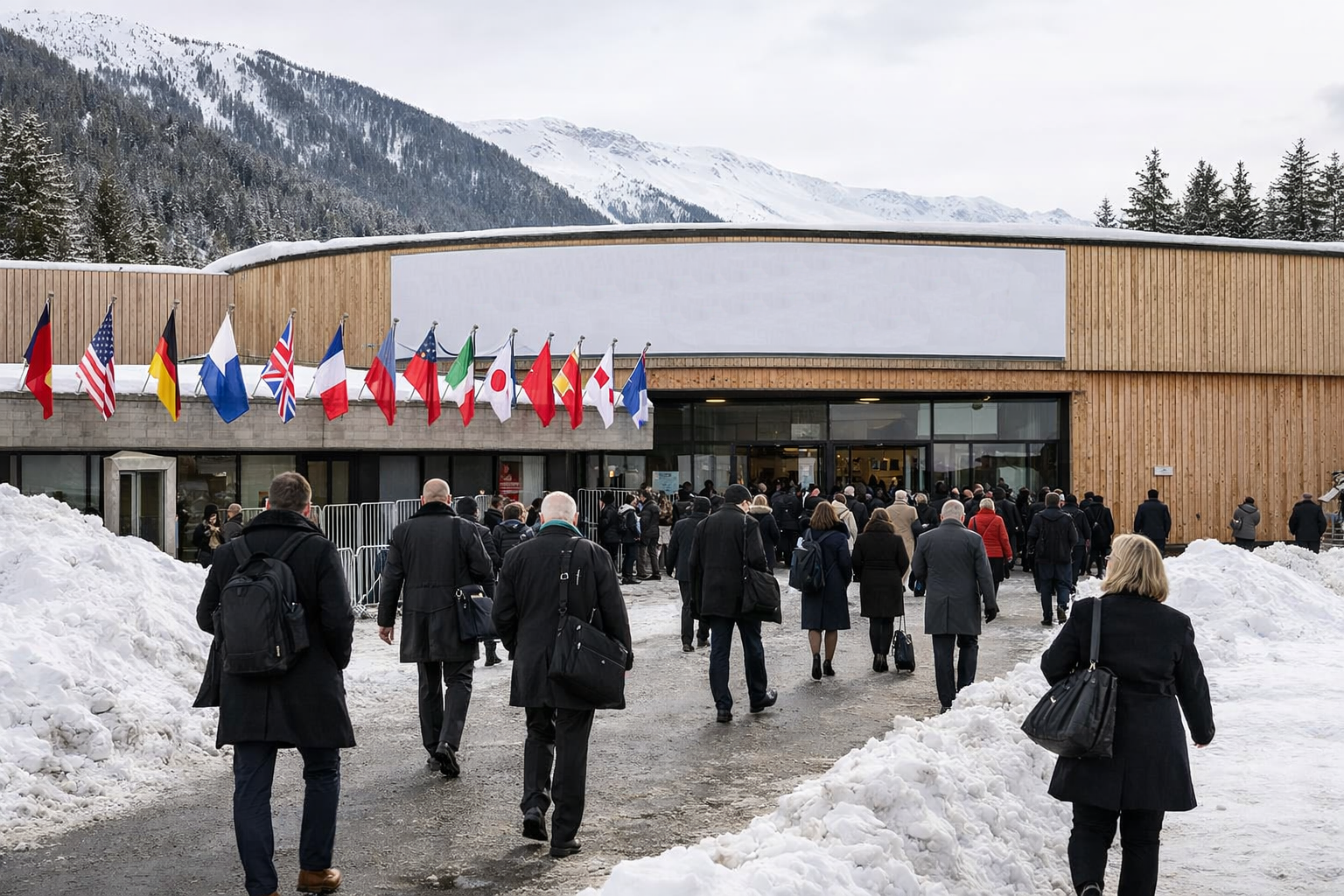


The World Economic Forum’s 2026 annual meeting in Davos opens against a backdrop of geopolitical strain and economic uncertainty. The Forum releases its Global Risks Report 2026, drawing on survey responses from hundreds of policy and business leaders worldwide. The findings show a marked shift in perceived threats.
Geopolitical confrontation and societal polarisation rank higher among short-term risks than in previous editions, while climate-related extremes remain prominent over the longer horizon. The reprioritisation reflects a world in which strategic rivalry and domestic political division increasingly shape economic outcomes.
A sharper geopolitical edge
The meeting is punctuated by visible transatlantic tension. Policy statements from US political figures concerning Greenland prompt public responses from European officials, underscoring friction within longstanding alliances. While Davos often emphasises cooperation, this year’s discussions expose fault lines in trade, defence and industrial strategy.
Such tensions matter beyond diplomatic optics. Supply chains in sectors such as semiconductors, energy and critical minerals remain vulnerable to political realignment. Governments across advanced economies continue to expand industrial policy tools, including subsidies and strategic investment screening.
The risks identified in the Forum’s report are not abstract. They inform how capital is allocated, how companies manage cross-border exposure and how governments frame national resilience.
Science at the policy table
Alongside political and corporate leaders, more than 100 scientific figures convene in parallel sessions linked to the Forum’s programme. Their presence reflects a growing recognition that climate modelling, epidemiology and technological assessment now influence macroeconomic planning.
Scientific input plays a role in shaping conversations on artificial intelligence governance, energy transition finance and global health preparedness. The integration of research expertise into economic forums suggests that risk management increasingly depends on technical as well as political judgement.
Institutional transition
The 2026 meeting also carries internal significance for the Forum itself. Leadership discussions emerge following the departure of its long-standing founder, with public reporting noting consideration of high-profile figures for succession. Institutional change within such a prominent platform signals adaptation to a more fragmented global landscape.
Davos has long been criticised as symbolic rather than decisive. Yet its influence lies in agenda setting. When risk assessments shift and geopolitical tensions surface openly in this setting, they reflect wider currents.
The discussions in Switzerland do not resolve global disputes. They do, however, reveal how political leaders, executives and scientific advisers interpret the environment in which they operate. In 2026, that interpretation centres less on expansion and more on resilience.