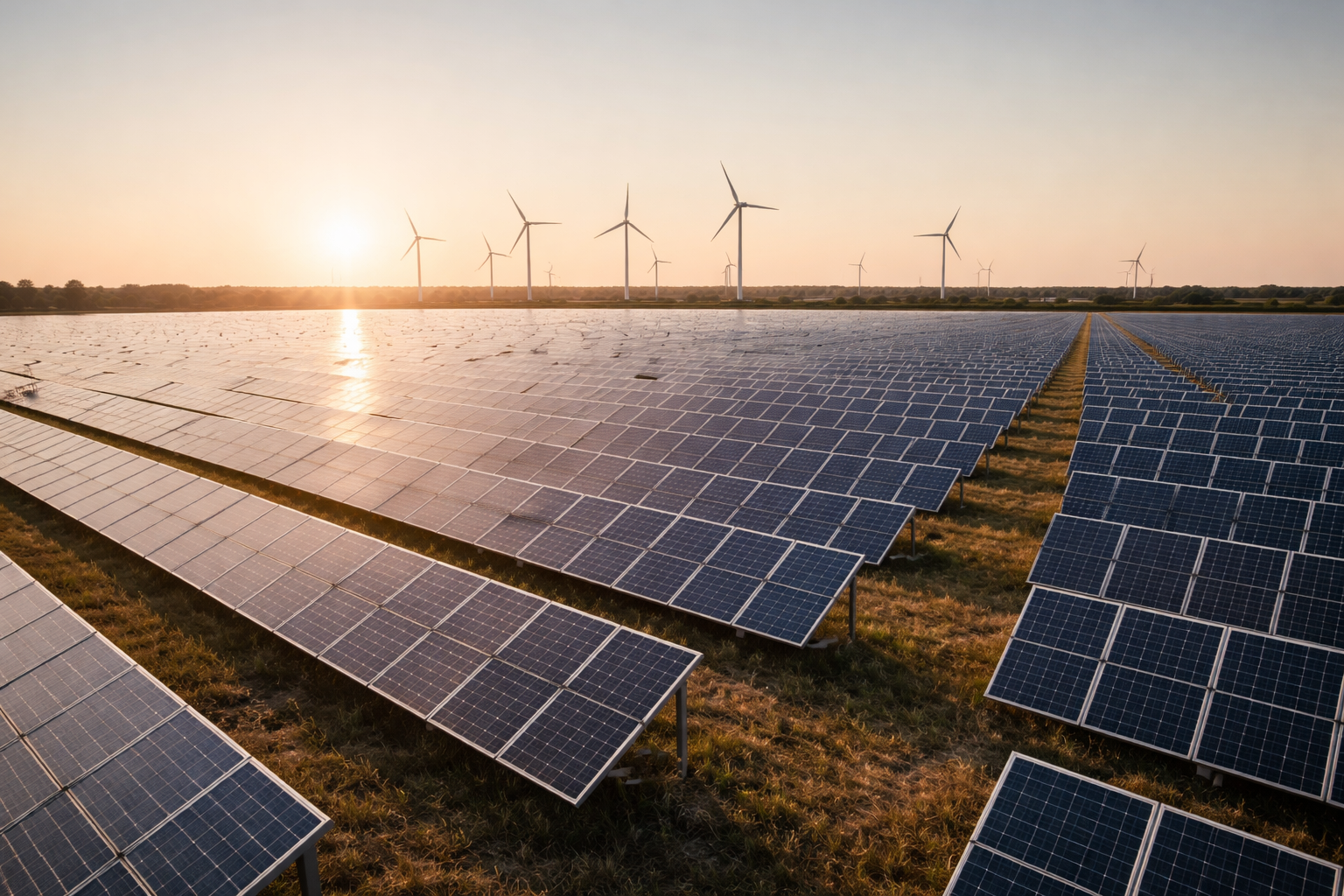


Global investment in clean energy continues at historically elevated levels as 2026 begins, reinforcing a structural shift in capital allocation. Industry analysis presented around the January economic meetings indicates that spending on renewables, grid infrastructure and low-carbon technologies remains robust, even amid geopolitical tension and higher borrowing costs.
According to recent data from the International Energy Agency, annual global clean energy investment has exceeded spending on fossil fuel supply in several advanced economies. In recent years, worldwide clean energy investment has reached well over one trillion US dollars annually, spanning solar, wind, nuclear, battery storage and electrified transport.
Capital flows reshape the energy mix
The growth in capital deployment is not confined to a single region. China, the United States and the European Union account for a significant share of renewable energy expansion, but emerging markets are also increasing capacity additions. Solar photovoltaic installations in particular continue to scale rapidly, driven by falling module costs and shorter construction timelines compared with conventional power plants.
Battery manufacturing and grid upgrades are receiving increased attention. As renewable penetration rises, electricity networks require reinforcement and modernisation to manage variable generation. Investment in grid infrastructure is now viewed as a prerequisite for further expansion of low-carbon capacity.
Public policy plays a role. Incentives under legislation such as the United States Inflation Reduction Act and European industrial support measures have helped stimulate private sector commitment. However, corporate procurement and long-term power purchase agreements also contribute to sustained demand.
Financial resilience in a higher-rate environment
One notable feature of current investment patterns is their persistence despite tighter monetary conditions. Higher interest rates increase financing costs for capital-intensive projects such as offshore wind farms or large-scale transmission lines. Yet clean energy spending remains comparatively resilient.
Several factors explain this. Renewable technologies have experienced significant cost reductions over the past decade, improving their competitiveness relative to fossil fuels. In addition, institutional investors increasingly incorporate climate risk into portfolio strategy, allocating capital toward assets aligned with decarbonisation pathways.
Energy security considerations further reinforce the trend. Diversifying generation sources and reducing exposure to volatile fuel imports appeal to governments seeking economic stability.
Structural rather than cyclical
Clean energy investment is not immune to policy shifts or supply chain disruption. Project delays and permitting bottlenecks remain challenges in many jurisdictions. Nonetheless, the data suggest that capital flows are increasingly guided by long-term structural considerations rather than short-term political cycles.
The transition does not proceed uniformly across regions or technologies. Yet the scale and persistence of current spending indicate that low-carbon infrastructure is becoming embedded in mainstream economic planning.
As 2026 unfolds, the key question is not whether clean energy investment continues, but how quickly supporting systems such as grids, storage and regulatory frameworks adapt to sustain momentum.