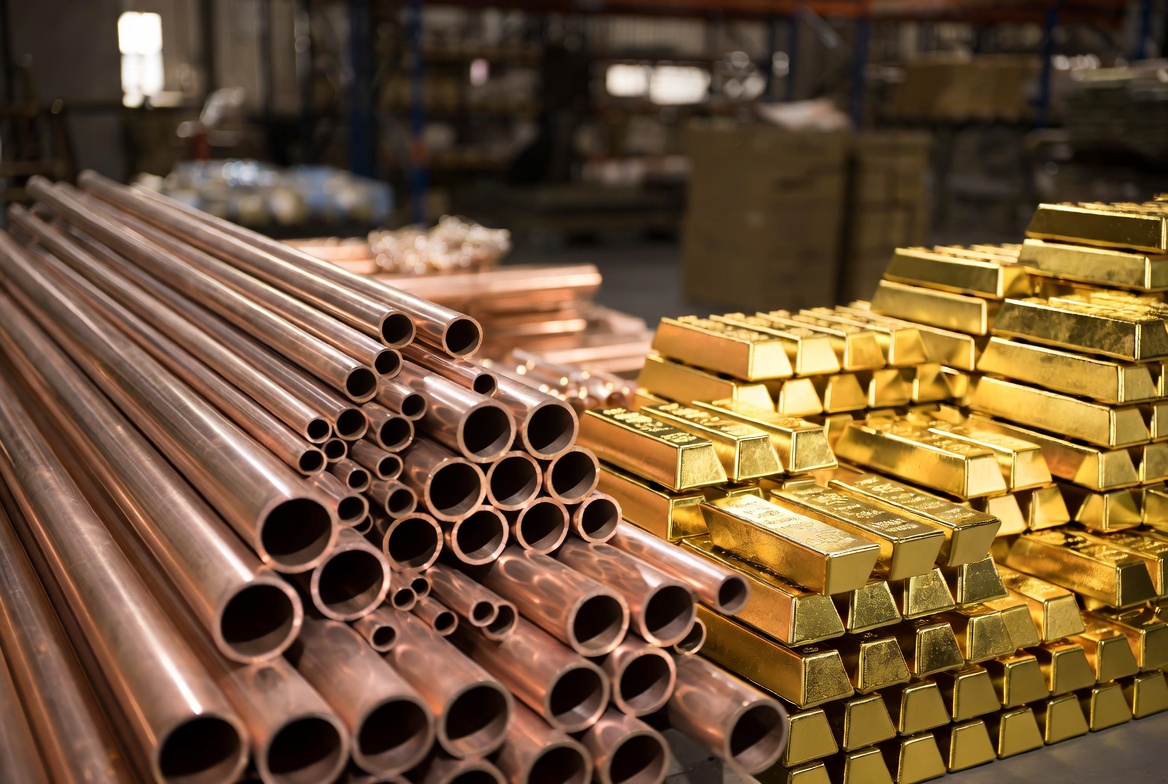


Copper prices are trading close to record highs at the end of June 2026, while gold drifts lower from the peak it reaches in January. The gap between the two metals matters because it shows where investors now place their bets, and it points to a deeper shift in the global economy towards electrification.
A widening divide
Copper sits near its all-time high this month and gains around 34% over the past year. It changes hands at roughly $6.50 a pound, close to the record of $6.67 reached in June. Gold tells a different story. It slips below $4,000 an ounce in late June, a fall of about 28% from the record of more than $5,600 set in January. The contrast is striking, since the two metals often move together in times of uncertainty. Copper holds its ground while gold retreats, a sign that demand for industrial metals is proving more durable than the rush into safe havens.
Why copper stays strong
Copper is the metal of electrification, and demand keeps rising. Electric vehicles, power grids and the data centres that run artificial intelligence all need large amounts of it. Supply struggles to keep pace. J.P. Morgan expects a refined copper shortfall of about 330,000 tonnes in 2026, the largest gap in years. Part of the problem lies underground, where average ore grades now fall below 0.6%, half the level of 25 years ago. New mines also take seven to ten years to reach production, so the market cannot respond quickly to higher prices. Years of underinvestment in mining add to the strain, and analysts warn that the shortfall could persist well beyond this year.
Gold's quieter correction
Gold's drop looks dramatic, yet most analysts treat it as a correction rather than a collapse. Central banks remain steady buyers and purchase a net 244 tonnes in the first quarter of 2026, above both the previous quarter and the five-year average. The People's Bank of China lifts its reported buying from around one tonne a month late last year to eight tonnes in April. These institutions rarely sell when prices fall, which supports the metal even as private investors step back. Gold keeps its role as a politically neutral reserve asset.
Outlook
Forecasts for the rest of the year differ. Goldman Sachs expects copper on the London Metal Exchange to ease towards $11,000 a tonne by December as tariff uncertainty clears and American stockpiles run down. J.P. Morgan is more bullish and sees an average near $12,075 a tonne for the year. Either way, the structural story stays the same. The energy transition and the AI build-out keep industrial demand firm, while gold leans on central banks for support. For investors, the message is that copper now reflects the real economy more closely than the traditional safe haven does.