In the early years of the internet, the giants of tomorrow were built by companies that understood the infrastructure beneath thesurface: the cables, servers, and switching networks. Today, the next frontieris just above our heads: the global space economy.
Morgan Stanley estimates that global investment in AIdata center infrastructure could approach $3 trillion over the coming years,reflecting the scale of compute, power, and physical infrastructure required to support next-generation artificial intelligence.1
Intellistake (OTCQB: ISTKF, CSE: ISTK) is emerging as a positioned company in this transformation, with plans to bridge terrestrial AI compute, orbital infrastructure, and staking a claim in what many technologists believe will be the next seismic shift in technology.
The New Data Center Frontier

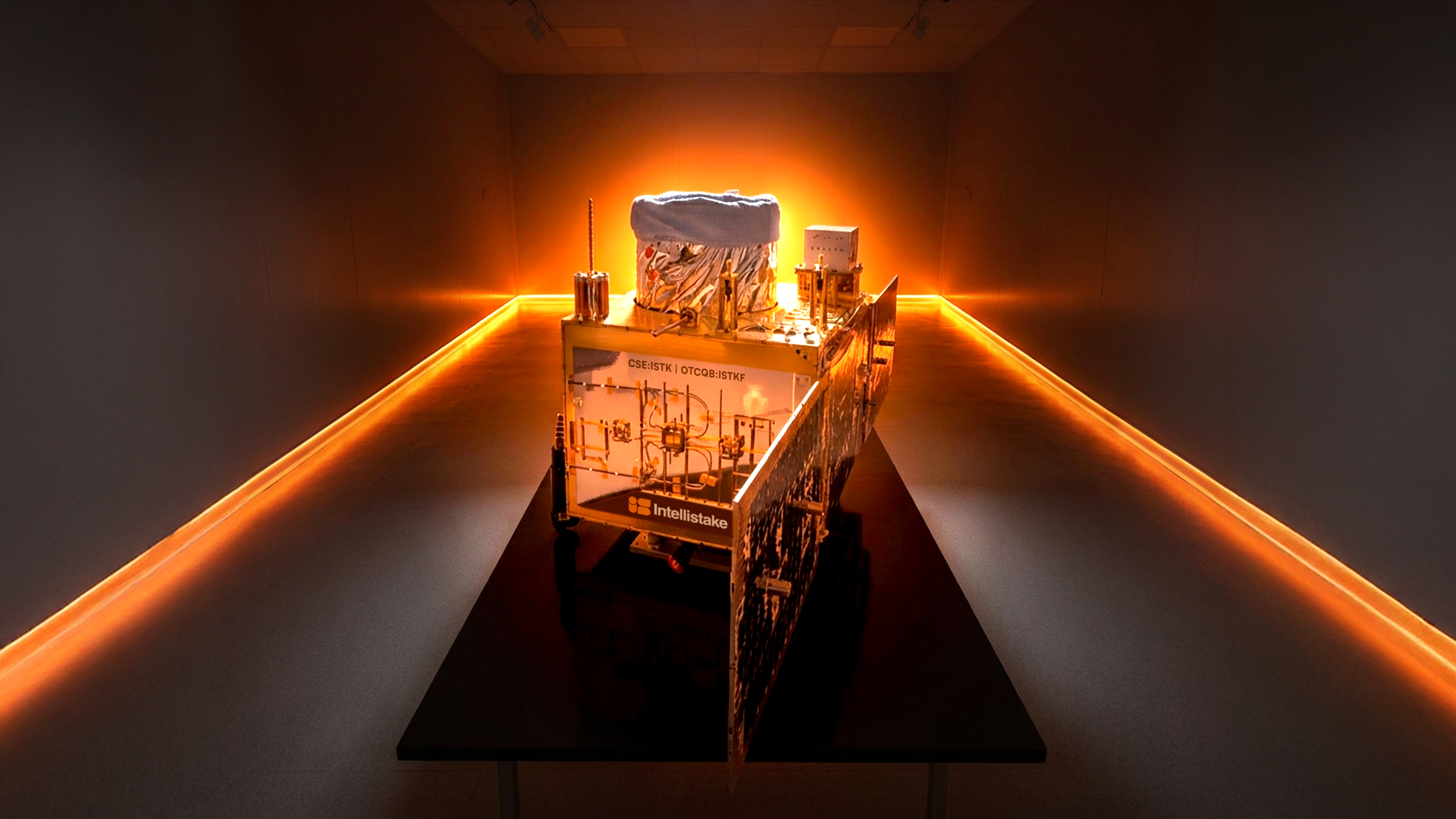
Rendering of proposed satellite for demonstration purposes. Not actual image.
Over the past few years, the idea that AI, data, and energy infrastructure could leave Earth stopped being science fiction and became corporate strategy.
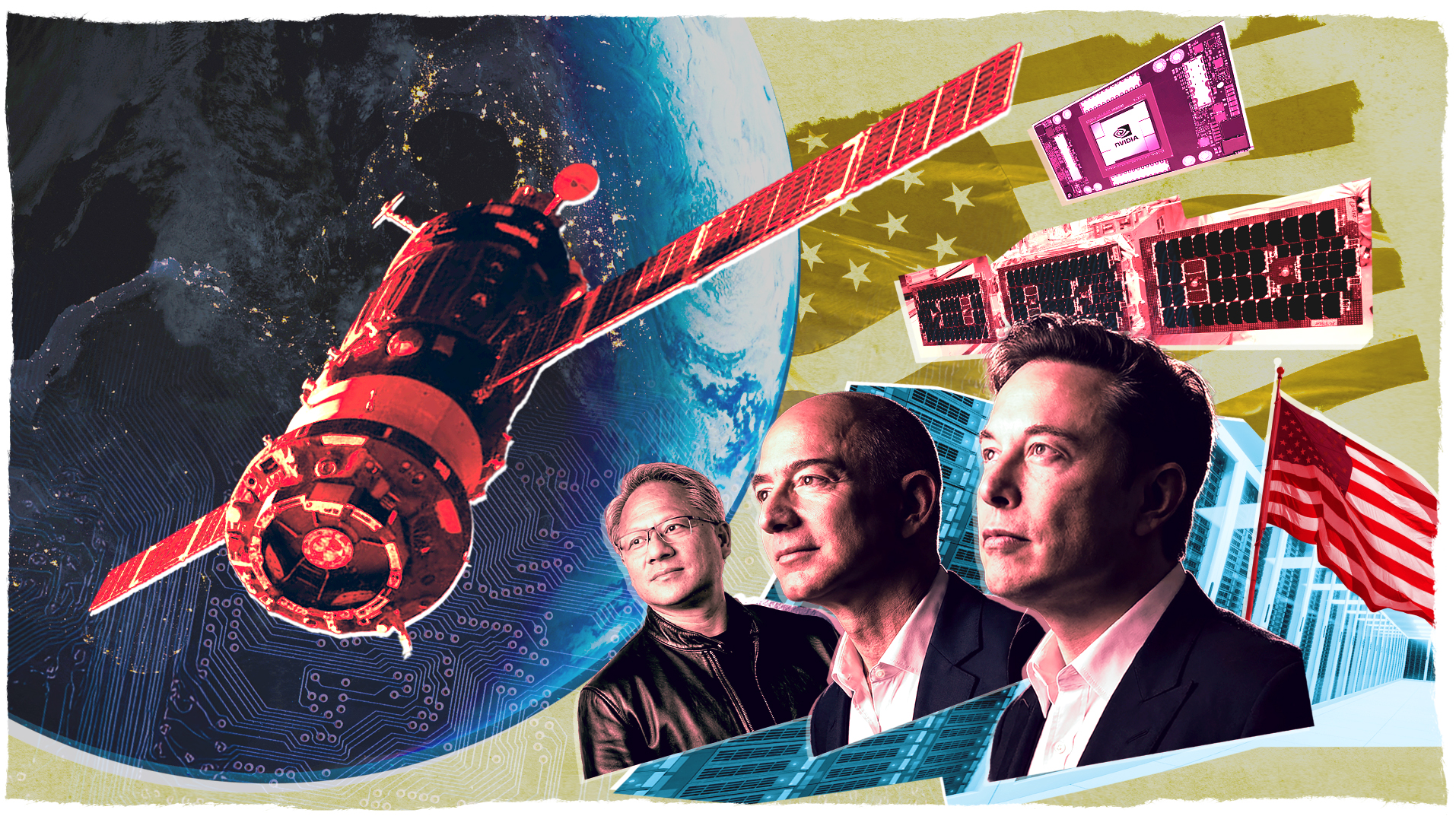
Elon Musk has been increasingly outspoken on the futureof AI infrastructure - and the limits large-scale deployment faces.
At the U.S.-Saudi investment forum in November 2025, Musk declared:
“My estimate is that the cost of electricity, the cost effectiveness of AI in space will be overwhelmingly better than AI on the ground… I think even perhaps in the four- or five-year timeframe, the lowest cost way to do AI compute will be with solar-powered AI satellites.”
He believes Earth simply can't support AI at scale. The electricity required, the cooling burden, and the pace of expansion are meeting hard physical constraints.
His solution? Build AI data centers in space.
In orbit, satellites can operate in near-continuous sunlight, generating up to eight times more solar power than ground-based panels.
The vacuum of space also provides superior heat dissipation compared to Earth-based cooling systems. As NVIDIA’s Jensen Huang noted, nearly the entire mass of current GB300 racks —roughly 1.95 tons out of 2 tons — is essentially cooling infrastructure.
And there are no land shortages, zoning rules, or grid bottlenecks.
He’s not alone in recognizing the potential in this solution. NVIDIA CEOJensen Huang has acknowledged that demand for AI compute infrastructure far exceeds current supply capacity, with data centers struggling to keep pace with exponential growth in AI workloads.²
They’re joined by a growing number of Fortune 500 companies, tech pioneers, and even governments now believe the backbone of AI compute infrastructure will soon be built in low-Earth orbit. Embracing this movement stands Intellistake (OTCQB: ISTKF, CSE: ISTK), a Canadian public company with a bold vision and an early seat at the table.
From Earth to Orbit: The Terrestrial Bottleneck
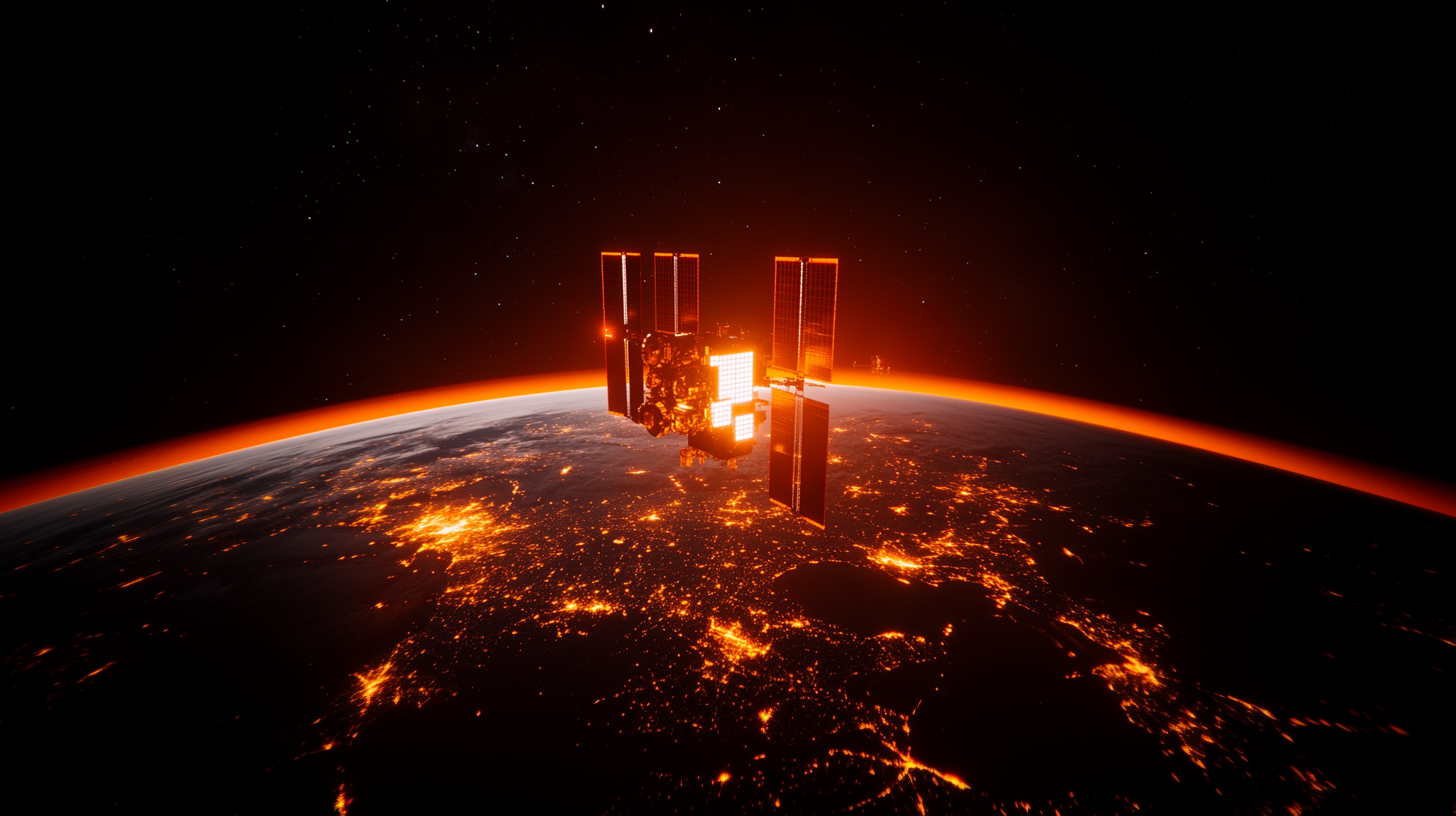
AI consumes extraordinary power. Training the largest models can require as much electricity as a small city. Earth-based data centers are straining grids, water supplies, and permitting systems. Space, by contrast, offers uninterrupted solar energy, passive cooling, and a global platform unbounded by geography.
Elon Musk, a pioneer in orbital infrastructure,has stated:
"By directly harnessing near-constant solar power with little operating or maintenance costs, satellites will achieve transformative cost and energy efficiency, significantly reducing the environmental impact associated with terrestrial data centers." 2
SpaceX has already launched more than 11,000 satellites, with roughly 9,600 currently active in orbit, and plans to deploy up to 1 million satellites over time, some of which may host solar-powered AI data centers. This unprecedented scale has Wall Street and investors taking note.
Intellistake + Orbit AI: Collaborating on the Orbital Cloud
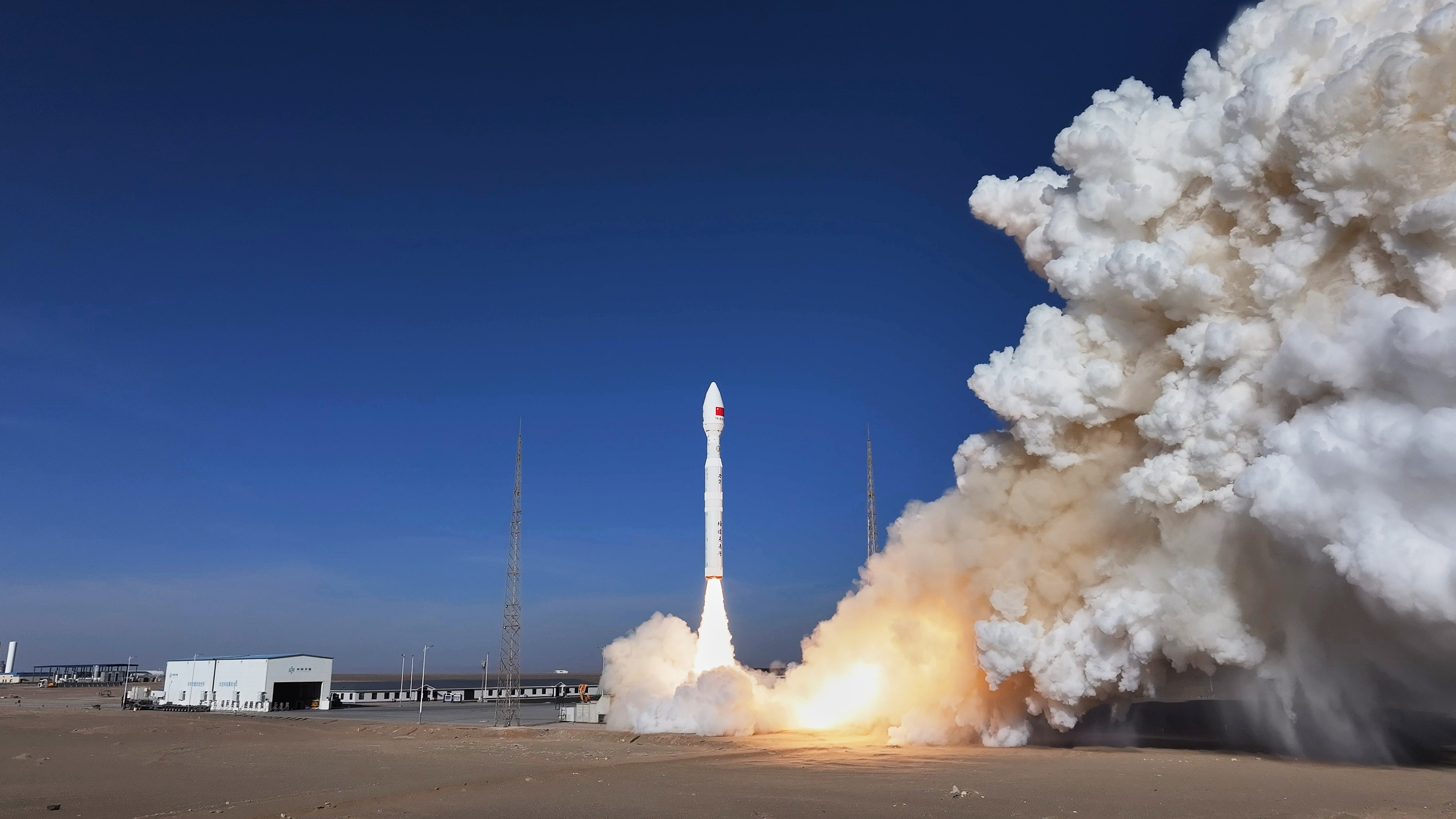
Amid this orbital revolution, Intellistake (OTCQB:ISTKF, CSE: ISTK) has established an advantage. In collaboration with Orbit AI, the company intends to support parts of the foundation of future data infrastructure, an Orbital Cloud that can host AI workloads, compute nodes, and blockchain verification beyond Earth’s limits.This isn’t theoretical: Orbit AI has already successfully launched its first satellite, demonstrating execution over ambition.It has been circling Earth at approx 7.59 km/s and completing a full orbit every 95minutes at an altitude of approximately 547 km.3
Through its website, Intellistake offers live access to Orbit AI’s satellite tracking system, enabling real-time monitoring of the satellite’s position, altitude, and velocity as it operates in orbit.
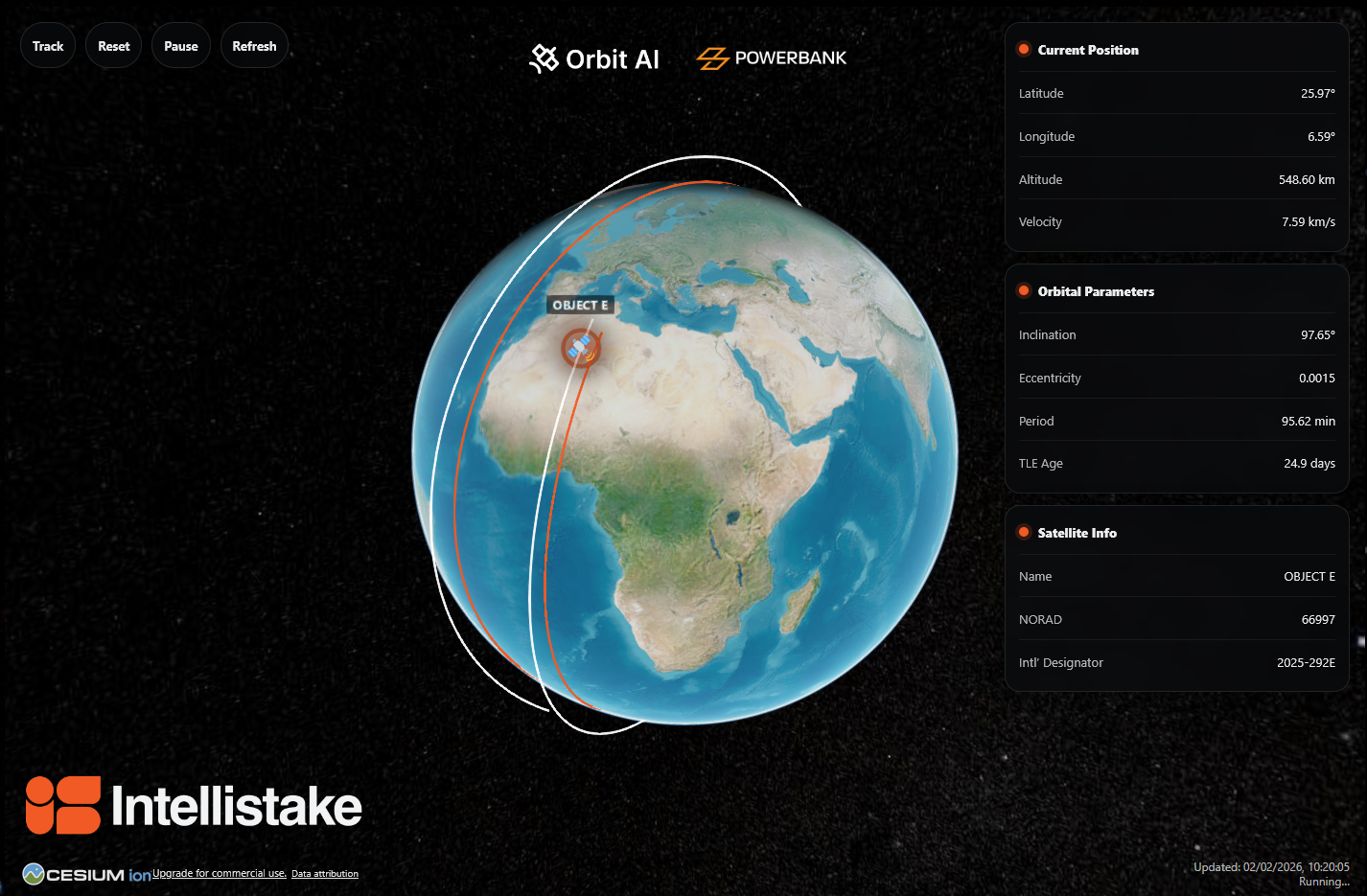
Track the satellite live →
Intellistake is working toward inclusion of its blockchain-verification payload on Orbit AI’s next scheduled mission in Q1 2026—subject to engineering validation and regulatory approvals.
Intellistake’s technology is designed to serve as the trust layer ensuring that AI processing in space remains secure, verifiable, and decentralized. Intellistake is a shareholder of Orbit AI and has a Collaboration Framework Agreement pursuant to which it intends in the future to provide infrastructure support ground-based operations and communications coverage across North America, Europe, and the Middle East for the Orbital Cloud, subject to agreement on terms.
Key components of the Orbital Cloud:
• DeStarlink: A decentralized satellite network for global connectivity.
• DeStarAI: Solar-powered orbital AI data centers with passive cooling.
• Orbital Blockchain: Secure, distributed verification in orbit for global finance and data applications.
This combination of AI and planned support for orbital architecture makes Intellistake one of the few public-facing ways for investors to participate in the future space-based AI infrastructure frontier.
Why Fortune 500 Companies Are Racing to Orbit
Tech giants and governments are all-in. Microsoft, AWS, Oracle, NVIDIA, Meta, Amazon’s Project Kuiper and China’s planned mega constellations are investing billions. Even the EU has committed over €10billion to the IRIS² satellite program.3
Elon Musk – SpaceX/Starlink:
“Beyond Earth, the Sun rounds up to 100% of all energy. Solar-powered AI data centres in space, where sunlight is constant and cooling is efficient, could become economically viable within a few years.”4
Jeff Bezos – Blue Origin:
"We will be able to beat the cost of terrestrial data centers in space. The next step is data centers and other kinds of manufacturing."5
Satya Nadella – Microsoft:
“The biggest issue we are now having is not a compute glut, but it’s power — the ability to get the builds done fast enough close to power. If you can’t do that, you may actually have a bunch of chips sitting in inventory that I can’t plug in.”6
Sam Altman – OpenAI:
“The cost of AI will converge to the cost of energy.”7
Gus, CEO of Orbital Ai:
"The successful launch of our first Orbital Cloud satellite moves this architecture from concept toward active capability. With Intellistake completing its investment and preparing verification systems for our next mission, we are strengthening the trust layer needed to scale this network."
Technical Edge

Operating AI and data systems in orbit is technically advantageous:
- Thermal management: Passive radiative cooling eliminates energy-intensive watercooling.
- 24 / 7solar energy: Continuous power without night or weather interruptions.
- Low-latency & global reach: Real-time AI inference anywhere on Earth.
- Secure & sovereign: Decentralized nodes reduce geopolitical, network, and outage risks.
This is the foundation for the next generation of AI infrastructure — one that Fortune 500 companies and governments are racing to secure.
A Multi-Trillion-Dollar Market on the Cusp
The numbers illustrate the scale of the opportunity:
- Active satellites today (SpaceX): ~9,6008
- Satellites planned in LEO (SpaceX): 1 million+9
- Global satellite market: $286B (2022)→ $615B (2035)10
- Orbital data centers: $1.77B (2029) →$39B (2035)11
- Satellite data services: $12B (2024) →$55B (2034)12
- Global Space economy: $613B (2024) → $1T+ by 20321
Sam Altman believes that more climate-friendly sources of energy, particularly solar power and storage, are the way forward for AI, stating,
“There’s no way to get there without a breakthrough.”13
Jensen Huang, CEO of NVIDIA, believes the world is on the cusp of what he calls the
“largest in frastructure build-out in human history.”14
Intellistake (OTCQB: ISTKF, CSE: ISTK): Positioned at the Infrastructure Layer of the Next Seismic Shift
Intellistake offers a rare public window into the intersection of AI and orbital infrastructure.
Key reasons to consider an investment:
- Blockchain infrastructure in orbit
Intellistake is a collaboration partner and a shareholder of the orbital‑cloud pioneer Orbit AI—and Orbit AI is set to operate blockchain validators in space. A market with disruptive potential. - A bridge between traditional investors and decentralized technologies
A regulated public listing gives retail investors direct access to projects that are otherwise largely reserved for institutional crypto funds. - Strategic early‑stage allocations in AI and Web3 protocols
Intellistake selectively invests in high‑growth blockchain networks focused on AI—and aims to generate returns through treasury strategy and staking. - Proprietary AI agent suite with a decentralized backbone
The IntelliScope platform that is under development combines modular enterprise solutions with blockchain verification—an advantage in an era of rising regulatory demands. - Potential for exclusive technology lead through orbital connectivity
Satellite‑supported infrastructure enables extremely low latency, independent data processing, and global resilience—a game‑changer for critical AI applications. Intellistake and Orbit AI are in discussions on Intellistake’s involvement in this initiative. - Partnerships with key industry players
Orbit AI, Fireblocks, Singularity Venture Hub, and others—Intellistake is strategically connected to leading technology andsecurity providers. - Attractive valuation with global scaling potential
With a market capitalization of roughly CAD 100 million, Intellistake stands in sharp contrast to many comparable players. - Clear roadmap with identifiable catalysts
Intended payload integration on an Orbit mission, future commercialization of IntelliScope launch, potential treasury expansion, and new nodes—concrete targets to achieve over the next 6–12 months.
Jason Dussault – CEO of Intellistake (OTCQB: ISTKF, CSE:ISTK):
"Intellistake is creating a global platform where AI, energy, and orbital infrastructure converge. Our mission isto enable limitless intelligence while keeping sustainability and sovereignty at the core of every operation."
Risks & Considerations
While the opportunity is extraordinary, investors should consider:
- Launch and deployment risks remain in orbital operations.
- Upfront capital and regulatory approvals are significant.
- Hardware upgrades require careful logistics.
Despite these challenges, Intellistake’s first-mover advantage, proven execution, and alignment with global AI and space trends provide a compelling risk/reward profile.
Your Opportunity: Be Part of the Next Digital Revolution
The question isn’t if orbital AI infrastructure will reshape the next century, it will. The question is which companies and investors will participate. Intellistake (OTCQB: ISTKF, CSE: ISTK) is one of the few public companies offering access to the next tech frontier.
[CSE: ISTK | OTCQB: ISTKF]