Silver’s destiny is no longer in question, it’s been rewritten.
Once viewed merely as a precious metal, silver has now been elevated to the ranks of strategic necessity.
In November 2025, the United States formally added silver to its Critical Minerals List, marking a pivotal shift in how this metal is valued and utilized. This single move redefines silver’s importance in national security, technology, and the clean-energy economy.[1]
At the same time, industrial demand has exploded to record highs.[1]

According to The Silver Institute, global industrial use reached an all-time high of 680.5 million ounces in 2024, and demand in 2025is expected to exceed 700 million ounces. [2] Fueled by growth in AI, electric vehicles, and infrastructure, demand from the energy and electrification sectors has risen by more than 8% annually over the past three years, far out pacing supply. [7]
The result? A deepening global supply deficit — and a strategic opportunity for the companies positioned to fill it.
Reviving America’s Silver Legacy
Amid this global race for critical minerals, Metal source Mining (WKN: A4021B | CSE:MSM) is bringing a forgotten American treasure back to life. The company’s Silver Hill Project was the cornerstone of America’s silver industry.[3]
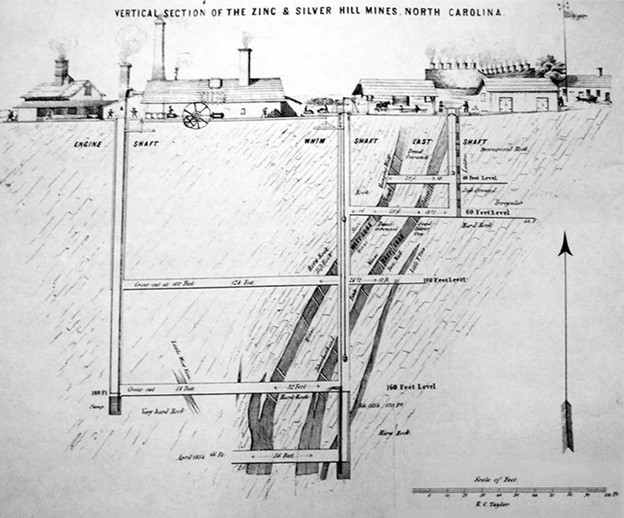
Before Nevada earned its “Silver State” nickname, there was Silver Hill in North Carolina — where, in 1838, Americans first mined silver on U.S. soil. Back then, the price of silver hovered around USD $1.32 per ounce; today, it has surpassed $50 a surge of about 60% in just the last year. While gold topped US $4,000/ oz and up 50% in the same period. [3][4][5][6][14]
Spanning approximately 1,128 acres, Silver Hill is focused exclusively on silver. With global demand surging and the U.S. now designating silver as critical to its economic future, this historic site stands poised for a resurgence. [3]
Metalsource Mining’s (WKN: A4021B | CSE: MSM) team is preparing to explore a project that played a foundational role in America’s silver legacy — and in doing so, could play a role in securing its future supply.
Historical estimate: 347,422tonnes grading 23.7 g/t silver, 2.17 g/t gold, 0.20% copper, 2.79% lead, 8.66%zinc [4]
Silver Hill: Historical Surface & Drill Highlights [4]
- Surface (Sample SH25003): 444 g/t Ag and 17.7 g/t Au — bona fide bonanza-grade rock.
- UG Diamond Drill — Hole 7: 6.4 m @ 161.81 ppm Ag (~161.8 g/t Ag) from 1.52 m
- UG Diamond Drill — Hole 8: 14.02 m @ 84.43 ppm Ag from surface.
- UG Diamond Drill — Hole 50: 7.62 m @ 99.92 ppm Ag from surface.
*Historical estimate: 347,422 tonnes grading 23.7 g/t silver, 2.17 g/t gold, 0.20% copper, 2.79% lead, 8.66% zinc[4]. In 2023 SRK conducted a review of the existing data and created a “mineral inventory”. This historical estimate suggests the presence of 347,422tonnes grading 23.7 g/t silver, 2.17 g/t gold, 0.20% copper, 2.5479% lead,7.888.66% zinc (Burkett, S. SRK Technical Memorandum Project #USPR001521, 2023)This historic estimate was characterized as "a mineral inventory" and was not calculated using CIM or SME defined standards and should not be considered mineral resources, but it merits stating as it is a culmination of efforts on the project and shows the geologic potential. The mineral inventory relied on a MetVal calculation using the formula = (Ag OPT * Ag recovery * Ag US$/oz) + (Au OPT * Au recovery * Au US$/oz) + ((Cu % * Cu recovery * Cu US$/lb)/100)*2000) ((Pb % * Pb recovery * Pb US$/lb)/100)*2000) + ((Zn % * Zn recovery * Zn US$/lb)/100)*2000), where US$1805/oz Au, US$22.70/oz Ag, US$3.75/lbs Cu, US$1.34/lb Zn, US$0.94/lb Pb and recoveries Au 95.5%, Ag 89.9%, Cu 86.3%,Zn 91.4%, 84.5% Pb. A qualified person has not conducted sufficient work to define what work would be required to classify the historical estimate to meet current CIM definitions of a resource(this may require additional drilling and other work, as yet undefined). Metalsource Mining is not treating this historic estimate as current mineral resources and a qualified person has not reviewed the work to define the quality of the work associated with this historic estimate.
National Policy Meets Corporate Strategy
Silver’s inclusion on the U.S. Critical Minerals List gives Metalsource Mining (WKN: A4021B | CSE: MSM) a crucial advantage — alignment with federal priorities for domestic resource development. Washington’s recent policy actions highlight this trend:
- Lithium Americas received a US $2.26 billion DOE loan for Thacker Pass (Nevada) — the nation’s largest lithium project [15]
- MP Materials secured Department of Defense funding to build out U.S. rare-earth separation capacity. [16]
- Trilogy Metals gained federal backing for the Ambler Access Project in Alaska.[17]
These moves reflect a national pattern: re-shoring mineral supply and prioritizing U.S.-based projects. Silver’s new classification ensures it will likely benefit from similar incentives.
That’s where Metalsource Mining (WKN:A4021B | CSE: MSM) fits perfectly — a domestic silver company aligned with America’s strategic objectives.
The Bird-Pilot Project: Expanding a U.S.Footprint
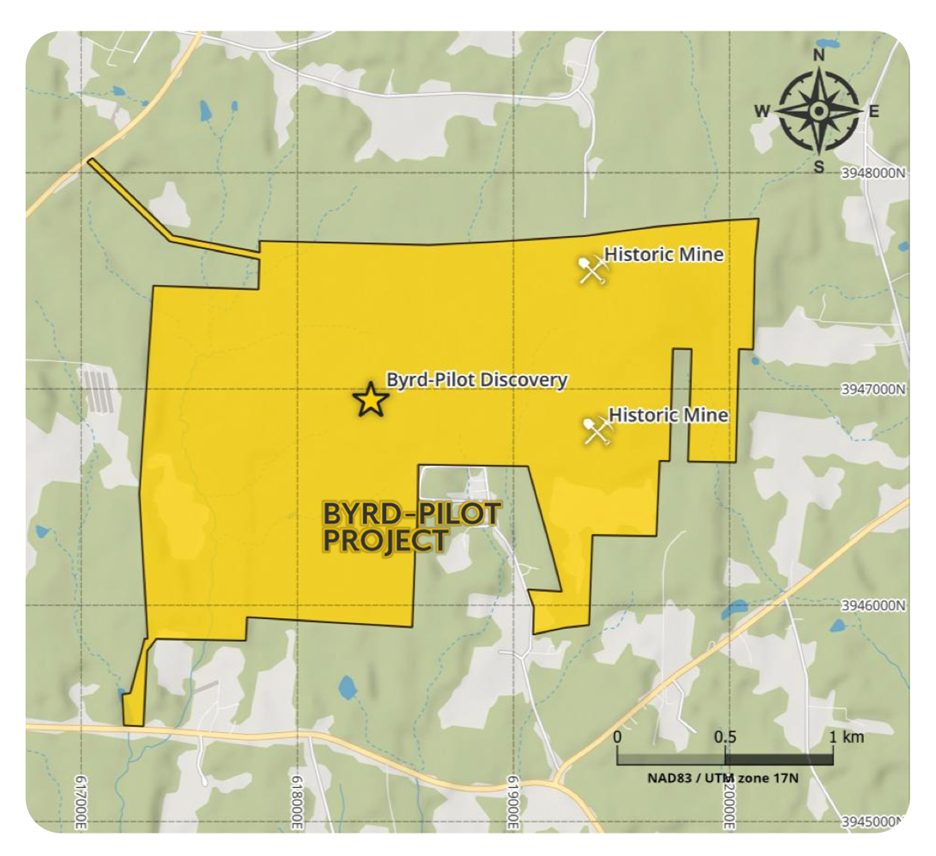
Beyond Silver Hill, Metalsource Mining(WKN: A4021B | CSE: MSM) owns the Bird-Pilot Project, another 1,000-acre property in North Carolina showing a potential porphyry gold-copper system. Historic drilling intersected 27.4 m of 0.9 g/t Au from 24.4 m depth, confirming broad mineralization zones. [8]
While Silver Hill is the company’s primary asset , Bird-Pilot adds depth and optionality to the exploration portfolio, offering exposure to both precious-metal and base-metal markets within the same supportive jurisdiction.
The Strategic Pivot
Metalsource Mining (WKN: A4021B | CSE:MSM) was originally focused on other minerals, but when the opportunity arose to buy “Americans First Silver Mine” the company jumped at the opportunity. With the groundwork done and historic results proven, the project is primed to be drilled with modern technology. [4]
Risk Disclaimer: Drill intervals above are exactly as reported historically and remain subject to confirmation via modern drilling and QA/QC. True thickness estimated to be approximately 85% of drill interval.
To kick off this next chapter, the company has committed $1 million toward drilling and exploration across its two core properties — a bold move that signals execution, not speculation.
And when billionaire Eric Sprott, one of the most successful resource investors in history, steps in as lead investor, it’s not just financing — it’s validation. [9]
Billionaire Validation

Image courtesy of Financial Post, April 18, 2022 [22]
Billionaire mining icon Eric Sprott has taken a notable position in Metalsource Mining (WKN: A4021B | CSE: MSM), putting his name and capital behind this company.
His strategy has always been clear: identify undervalued silver companies with strong management in sectors that will benefit from strong macroeconomic trends. [21] And now he has taken that approach with this company which tells us this could be an inflection point for Metalsource.
Eric Sprott is one of the sector’s longest-tenured backers of precious metals. He founded Sprott in 1981 and built it into a global manager centered on gold and silver—an “early champion of precious metals investing” whose career has spanned multiple cycles. He’s widely described as a long-time gold bull and, at times, has said the vast majority of his personal wealth outside of Sprott Shares sits in gold and silver [11][12][13].
A Race for Resource Security

The U.S. isn’t alone in this push for critical-mineral independence. Around the world, governments are racing to secure domestic supply.
In Europe, Germany launched a €1 billion Raw Materials Fund to guarantee access to strategic metals, with France, Italy, and the Netherlands joining the effort. [18]
“We need critical raw materials. This is all the more important in the context of looming trade restrictions and export bans,” said EU Commission President Ursula von der Leyen. [19]
In Asia, Japan and South Korea have partnered with the U.S. on secure-supply agreements, while India expands refining and smelting capacity to reduce import dependence. [20]
Against this backdrop, U.S. companies like Metalsource Mining (WKN: A4021B | CSE: MSM) enjoy a key advantage — credibility, transparency, and access to strategic partnerships in a trusted jurisdiction.
From Legacy Asset to Strategic Resource

By reviving a 19th-century mine, Metalsource Mining (WKN: A4021B | CSE: MSM) is attempting to bridge America’s mining heritage with its industrial future. Its near-term roadmap includes:
- Modern drilling to confirm and expand historical grades
- Geophysical mapping to define new target zones
- Environmental and permitting advances to align with U.S. standards
- Partnership and funding pursuits linked to critical-mineral initiatives
Each milestone brings Silver Hill closer tore-establishing itself as an important element of U.S. silver.
History, Policy, and Timing Aligned
It’s rare when history, geology, and policy converge so clearly.
Silver’s addition to the U.S. Critical Minerals List confirms what industry insiders have long known: the metal is essential to the future. [1]
As industrial demand shatters records and Washington prioritizes domestic supply, Metalsource Mining (WKN: A4021B |CSE: MSM) stands at the center of this alignment. Its flagship Silver Hill property — the nation’s first silver mine — is both a symbol and a solution: proof of America’s mining heritage and a path toward resource independence. [2][7]
With billionaire Eric Sprott’s backing, modern exploration underway, and recent addition to the U.S. Critical Minerals list, Metalsource Mining (WKN: A4021B | CSE: MSM) is more than a junior explorer — it’s a silver company that’s ready to drill.