Company report · Intellistake Technologies Corp.

Robots Could Be A $5 Trillion Market. They Can See. They Can Hear. They Cannot Smell.

Trillions in defense spending, and the front line is still a dog. Why Intellistake Technologies (CSE: ISTK | OTCQB: ISTKF) is betting on the one sense every robot on Earth is missing.


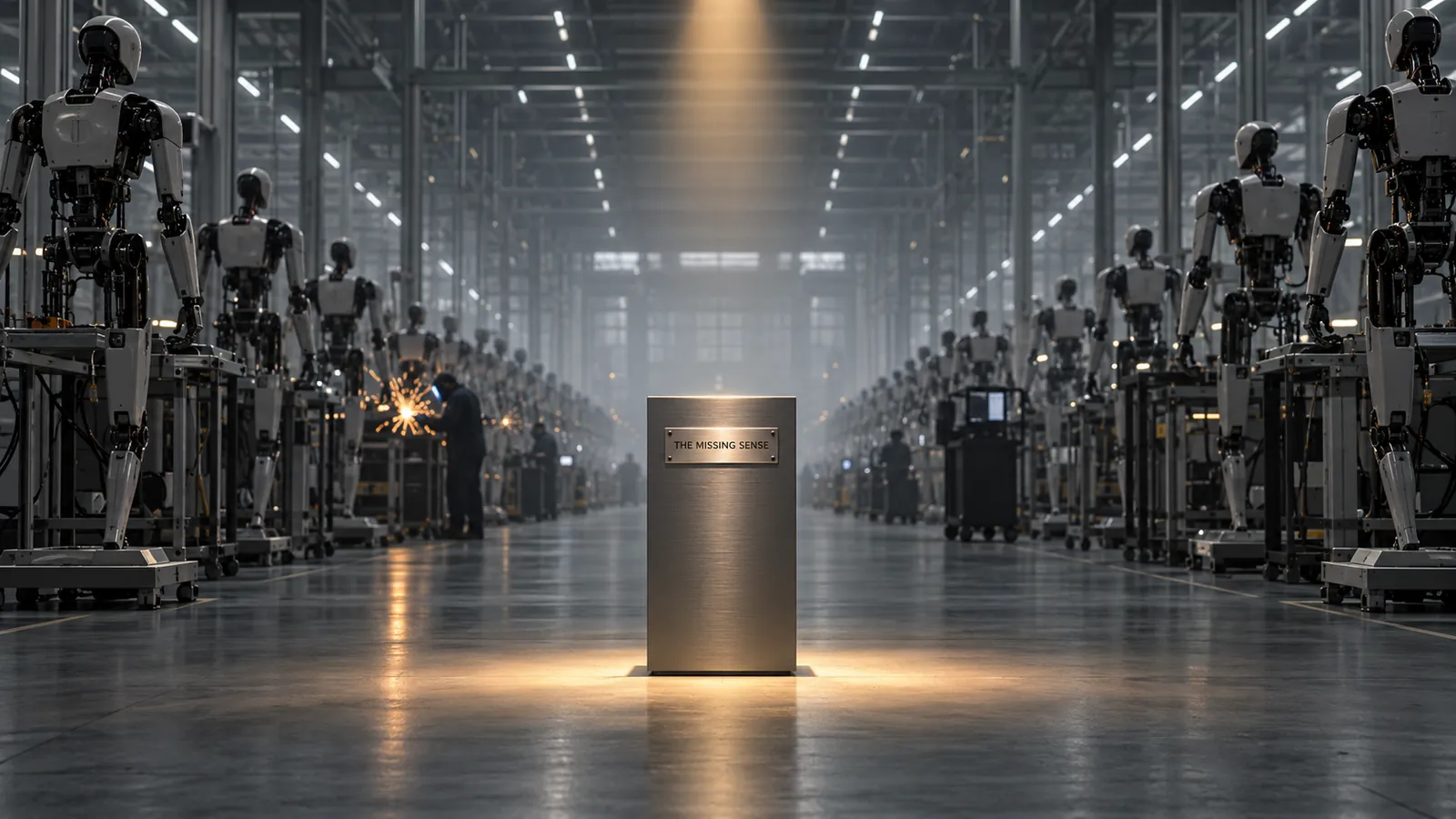
A humanoid robot head labelled sight, sound and touch. Smell is not fitted, while scent particles drift past it.

Disseminated on behalf of Intellistake Technologies Corp.

Intellistake Technologies Corp.CSE: ISTKOTCQB: ISTKFFSE: E41

The money has never been bigger.

In April, SIPRI confirmed the world spent a record $2.9 trillion on its militaries in 2025, the 11th straight year of increases.1 In May, Anduril raised $5 billion at a $61 billion valuation.2 By late August, Palantir was worth nearly $450 billion.3

And Wall Street says the robots are next. Morgan Stanley Research estimates humanoid robots could become a $5 trillion market by 2050, with more than 1 billion of them at work worldwide.4

The world’s richest man is betting his company on it. Tesla CEO Elon Musk, whose Optimus humanoid robot is still in development, put it in a single line on X:

Elon Musk

“~80% of Tesla's value will be Optimus.”

Elon Musk, CEO of Tesla · on X, September 2025 5

And the private market is paying up. In September 2025, humanoid robot maker Figure AI raised more than $1 billion at a $39 billion valuation.6 Eighteen months earlier, it was valued at $2.6 billion.6 That is a 15-fold jump, backed by Nvidia, Intel, Qualcomm and Salesforce.6

Private market, reported funding rounds

The private market is paying up

$0$20B$40B$60B 202420252026 $2.6B $14B $30.5B FIGURE AI $39B Sept 2025 · 15x in 19 months ANDURIL $61B May 2026 · 4.4x in 2 years
Post-money valuations at reported funding rounds; lines join rounds, not continuous prices. Sources 2,6.

Musk and Figure are building robots that can walk, see and use their hands. Not one that can smell.

Two of the largest markets on the planet. Satellites watching every corner of the globe. Drones that fly themselves. Robots that patrol military bases through the night.

They can see. They can hear.

But they cannot smell.

And when it comes to finding a bomb, a drug shipment or a chemical threat, the most advanced militaries in the world still rely on the same tool they used a century ago.

A dog.

The Current Front Line Is A Dog
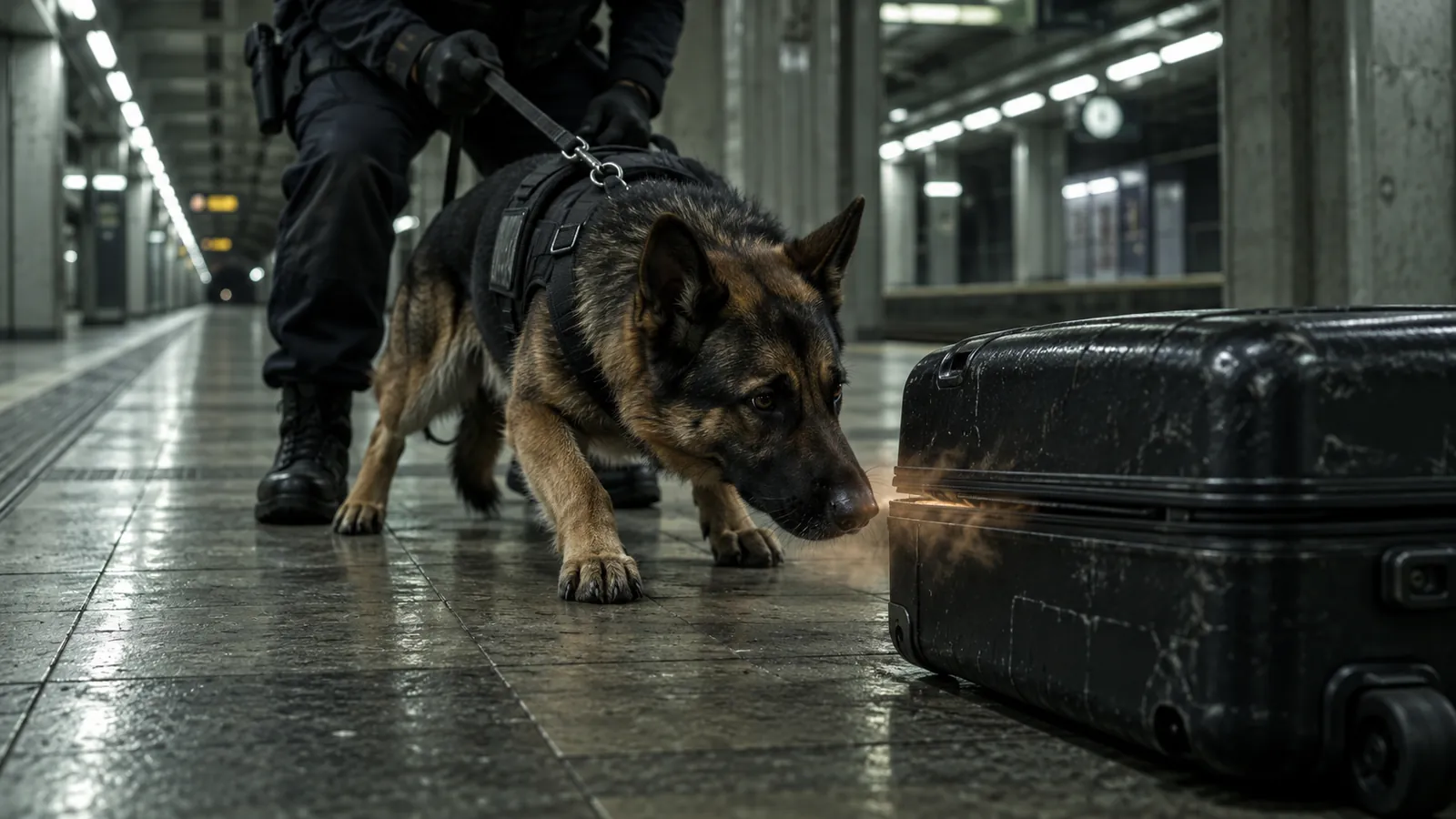
Illustrative image.

Here is what a single detection dog team costs, according to the U.S. Government Accountability Office.7

  • More than US$200,000 to stand up a TSA screening canine team.
  • Around US$153,000 to US$154,000 a year to keep it running, including the handler’s pay and benefits and a service vehicle.

For that money, you get a detector that cannot be mounted on a drone. It cannot work covertly. It cannot cover two locations at once.

Dogs are extraordinary animals, and their handlers are among the bravest people in uniform. But to find a threat, the dog has to get close to it. Often, so does the handler.

How close? In a 2024 study funded by the U.S. Office of Naval Research, trained dogs searching for explosive odors worked within about 3 feet of the source, and averaged just 11 to 18 inches away when pinpointing it.8

Close enough to touch the threat. And the handler is right behind.

Read that once more. Trillions in defense spending. And a dog.

The Robot Army Is Not Coming. It Is Here.
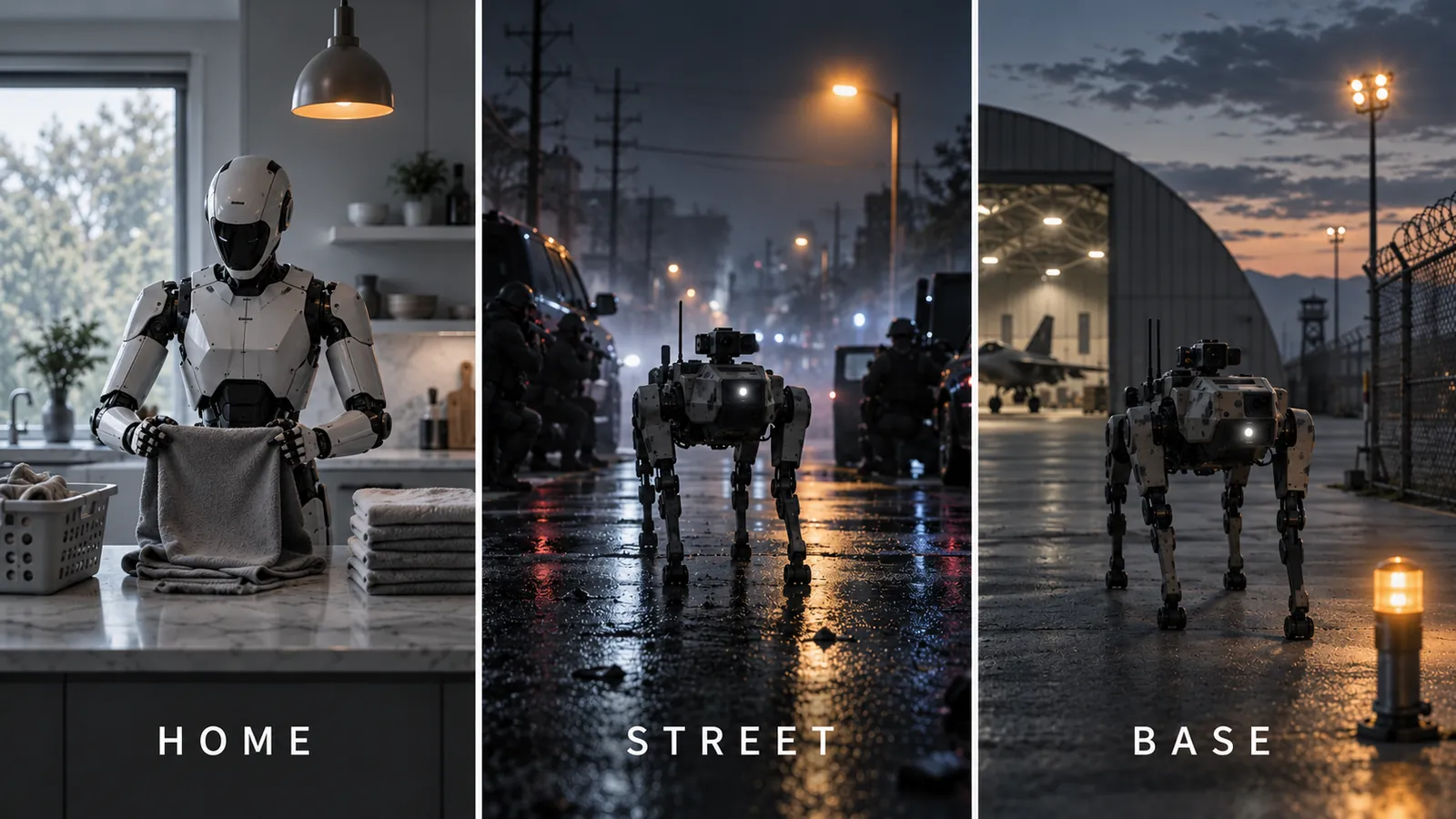
Illustrative image.

Elon Musk put it in two words on Tesla’s October 2025 earnings call: “robot army.”9

In November 2025, Tesla shareholders approved a pay package for Musk that includes a target of one million Optimus robots delivered.10

In the home, you can already put down a deposit on a US$20,000 humanoid that does household chores.11

On the street, more than 60 U.S. and Canadian bomb squads and SWAT teams now use four-legged robots in armed standoffs, hostage rescues and hazardous-materials incidents. Around 2,000 of one model alone are operating worldwide. Fully equipped, each can cost around US$250,000.12

In Washington, the Pentagon has requested US$13.4 billion for autonomy and autonomous systems. It is the first time autonomy has had its own line in the defense budget.13

Robots in the home. Robots on the street. Robots on the base. Money pouring in at every level.

Intellistake (CSE: ISTK | OTCQB: ISTKF | FSE: E41) has signed to own the sense they are missing.

The Robots Are Already On Patrol
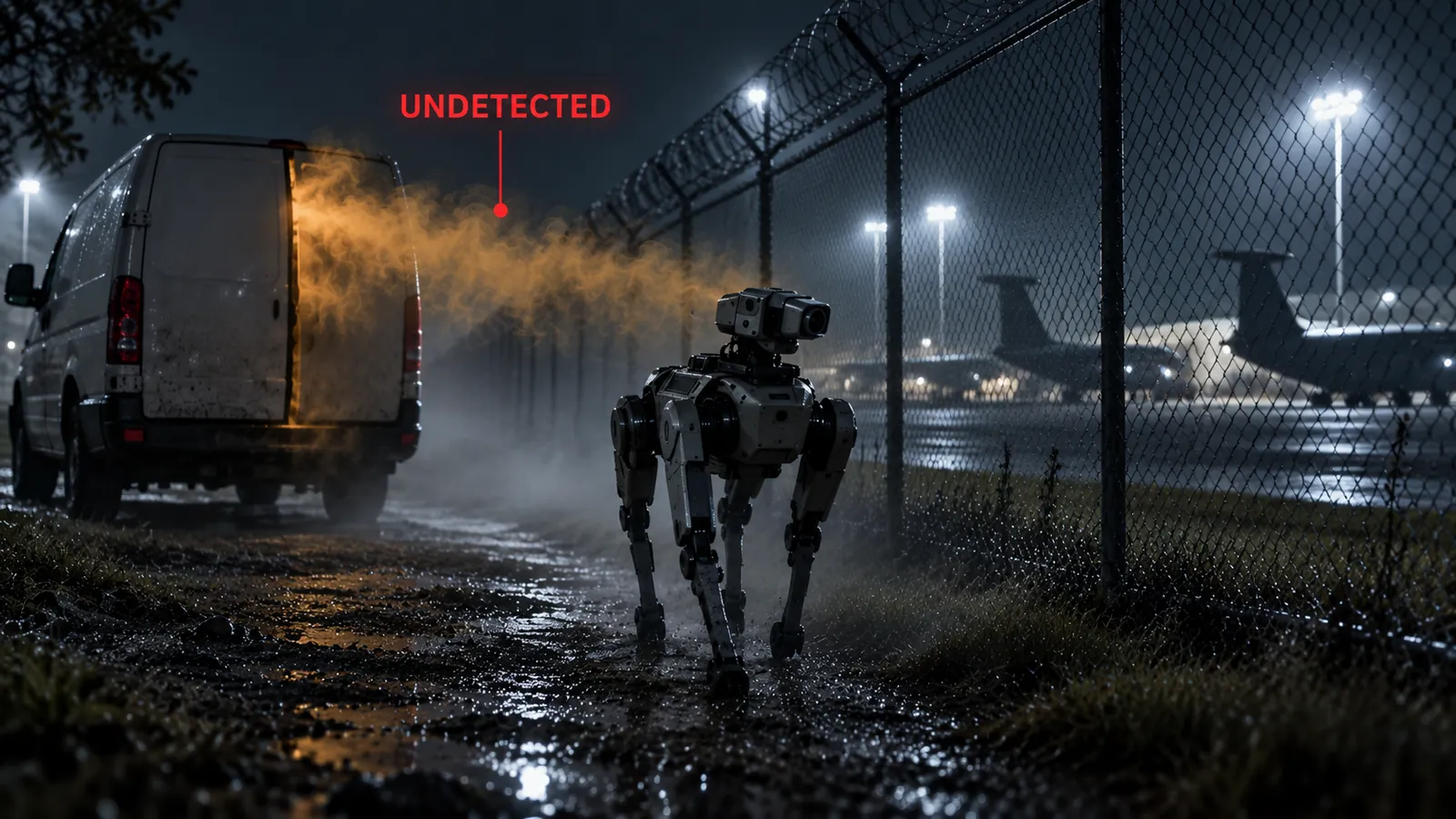
Illustrative image. Not actual field performance.

The replacement for the leash isn’t science fiction. It is already walking the fence lines of American military bases.

In 2020, Tyndall Air Force Base in Florida became the first Defense Department installation to put semi-autonomous robot dogs on patrol.14 In military language they are “Quad-legged Unmanned Ground Vehicles,” built by Ghost Robotics, and they walk set routes scanning for threats with cameras and onboard sensors.14

The Portland Air National Guard followed, becoming the first Guard unit in the country to receive one. Its job is to patrol a fence line and run video surveillance without putting airmen in danger.15

The Air Force’s own security commander described what these machines are for. In his words, they would be an extra set of eyes and ears.16

Eyes. Ears. Nothing else.

Today, those patrol robots see and hear. Mount a device that can also smell on the same chassis, and a fleet of them stops being a camera on legs. It becomes a standoff detector that never sleeps, sweeping for explosives, working a suspicious-package alert or screening cargo, with no handler at the end of a leash.

The robots are already patrolling.

What has been missing is the sense.

Eyes. Ears. Hands. No Third Sense.
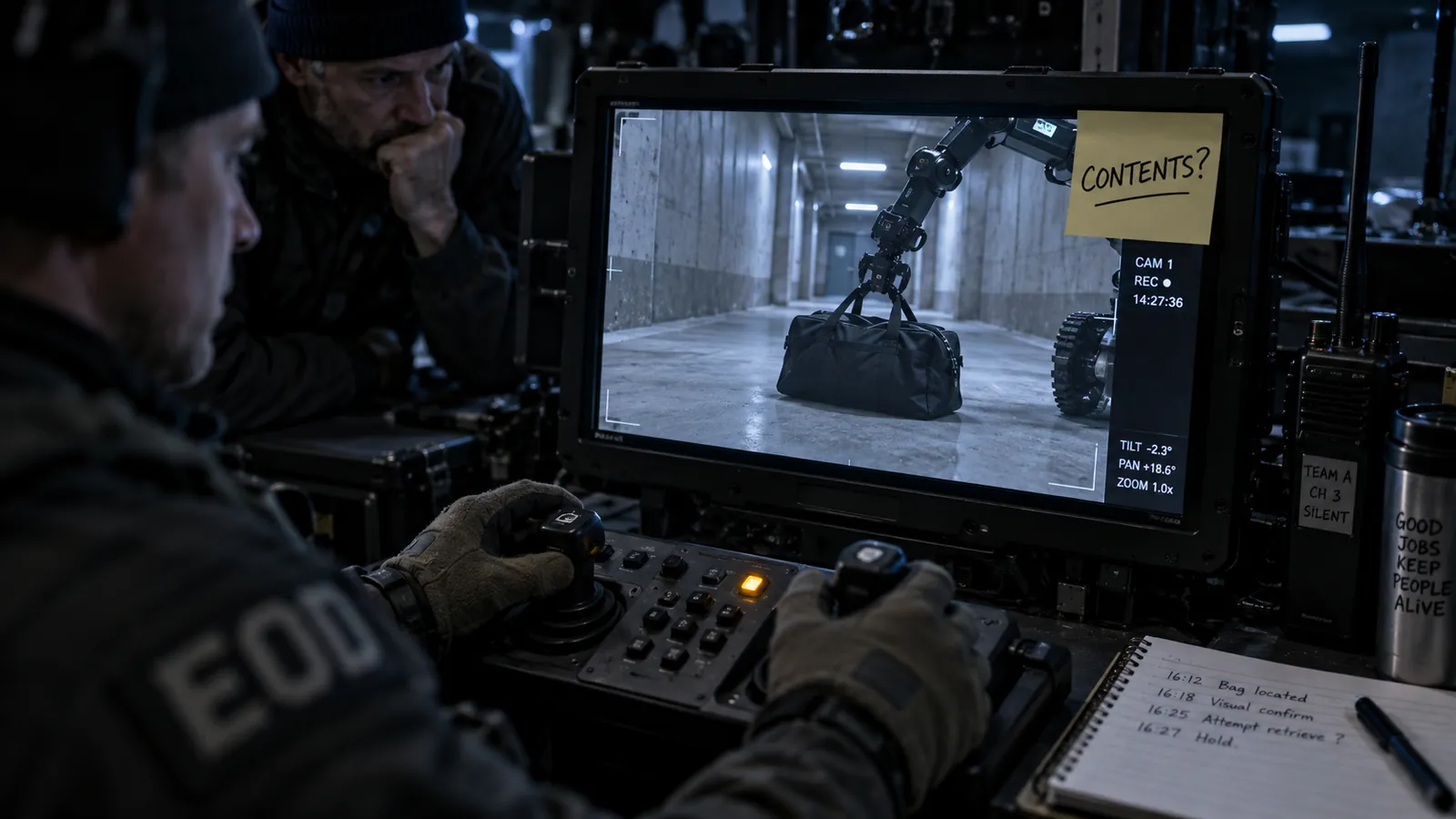
Illustrative image.

Look at what the robots making headlines are built with. Cameras. Microphones. Lidar. Touch sensors in the fingers.

Sight. Sound. Touch.

Now look at the threats that actually kill people.

A camera cannot see a vapor. A microphone cannot hear a molecule. Radar has nothing to bounce off.

Explosives leave chemical traces in the air. So does fentanyl. So do nerve agents. Every one of them is invisible to a camera and silent to a microphone.

Some robots can be fitted with gas sensors that sample the air around them.17 Detecting trace explosives and narcotics at a distance, before anyone gets close, is the problem NanoAi is working on.

So when a bomb squad sends its robot into a room, the robot can film the bag. It can listen. It can even pick the bag up.

Most cannot tell anyone what is inside it from across the room.

Finding a bomb still largely depends on a person, a dog or a robot getting close to it.

A US$5 trillion robot industry, and the most dangerous threats on Earth are still found by getting close enough to die.

The Small-Cap Building The Fix

Every one of those robots is being built to see and hear.

Not one of the headline humanoids is being sold to detect a bomb.

That is the gap. And one small-cap most investors have never looked at has signed an agreement to buy the company building the fix.

Intellistake Technologies Corp. (CSE: ISTK | OTCQB: ISTKF | FSE: E41) has signed a definitive agreement to acquire NanoAi Technologies for approximately C$17 million in shares.18

Here Is What NanoAi Builds
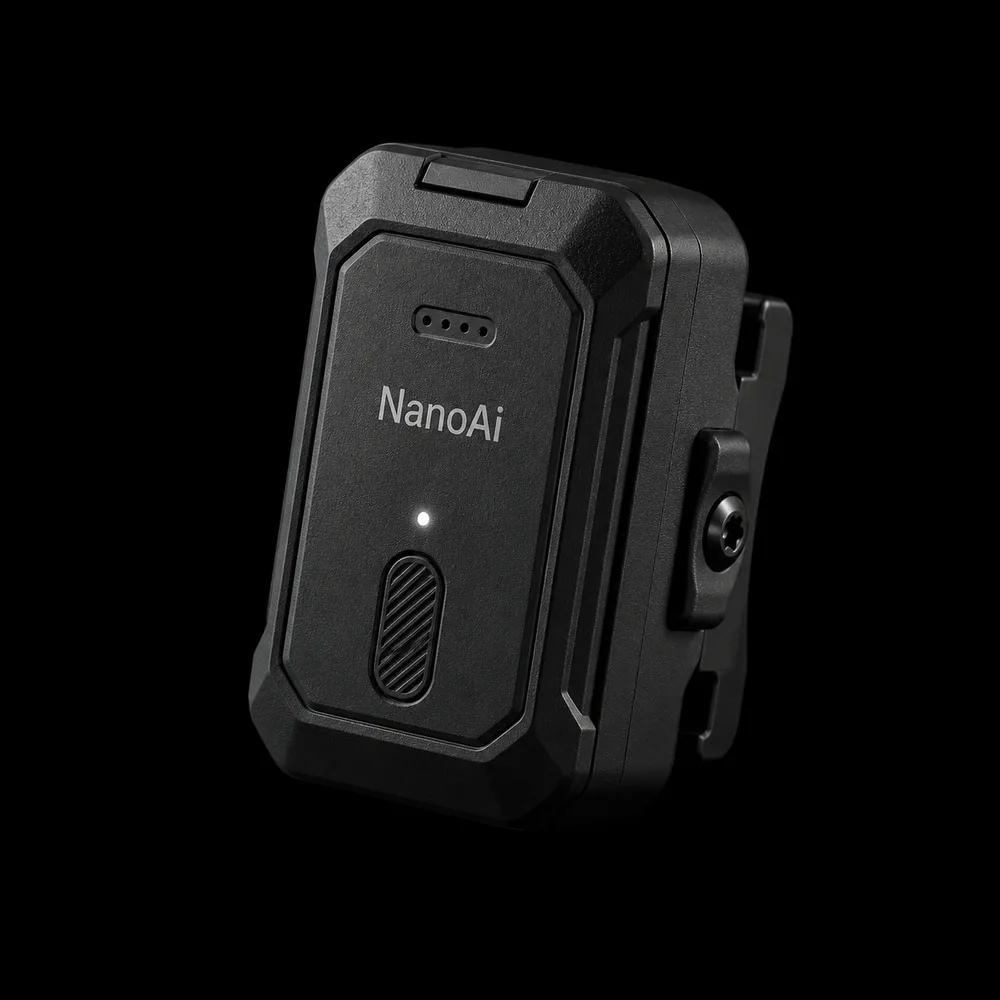
NanoAi device
Concept render.

A sensor built on a tiny chip.19

It is stackable, so several sensors can be layered to screen for different threat categories at the same time, in a single device.19 In peer-reviewed testing, it detected trace compounds as low as 50 parts per billion.19

According to Gentex Corporation, NanoAi’s technology can detect explosives, ammunition and narcotics at standoff distances, in wearable, drone, robot, vehicle and fixed-mount formats.20 NanoAi is now testing detection at 10 feet. Those results have not yet been released.40

Put it on a robot, and a camera on legs becomes a threat detector that never sleeps.

The underlying method is peer-reviewed in Scientific Reports, part of Nature Portfolio.19 More than 60,000 validation tests sit behind the platform.18 The founder is a 12-year U.S. Navy SEAL.19 And NanoAi holds a signed royalty-free license to develop for Gentex’s Ops-Core helmet platform, from the company that has supplied U.S. Special Operations Command since 1987.19,21

That is what ISTK has signed to own.

Areas drawn to scale

The robots, and the sense they're missing

C$17M US$5 TRILLION US$39B
  • US$5T

    What Morgan Stanley says humanoid robots could be worth by 2050. 4

  • US$39B

    What a humanoid robot company founded in 2022 is already valued at. 6

  • C$17M

    What Intellistake (CSE: ISTK) has signed to pay for the sense those robots are missing. At this scale, it's smaller than a pixel. 18

Circle areas proportional to value. C$17M converted at about 0.73 US$ per C$ for scale only. Market figure is a third-party estimate, not a forecast of Intellistake revenue.

Three Noses: Who Has To Get Close?

To find a threat by smell, something has to get close to it. The only question is what, or who.

A human has to handle it. Open the bag. Swab the surface. Touch it.

A dog has to put its nose on it. In a 2024 study funded by the U.S. Office of Naval Research, trained dogs searching for explosive odors worked within about 3 feet of the source, and averaged 11 to 18 inches away when pinpointing it.8 And its handler is never far behind.

NanoAi is designed for standoff detection, with no nose, paws or hands anywhere near the bag.20 It is currently being tested at 10 feet, more than three times the distance the dogs worked at. Results are not yet released.8,40

And because the sensor sits on a tiny chip, it doesn’t have to be carried by a person at all. It is designed to be mounted on a robot or a drone, so nobody has to walk up to the threat.19,20

To find it by smell, something has to get close

Who has to get close?

THE BAG 01 ft2345678910 ft HUMAN Must open it, swab it, touch it DOG Worked within about 3 ft Averaged 11 to 18 in to pinpoint. Handler close behind. NANOAI 10 FT: UNDER TESTING Designed for standoff. Results not yet released.
HumanThe person is there
DogDog, with handler close behind
NanoAi on a robot or droneNo one has to be there
Dog distances from one 2024 study (Mejia et al., Scientific Reports, funded by the U.S. Office of Naval Research); performance varies with conditions 8. NanoAi standoff design per Gentex 20. 10 ft testing in progress; results not yet released 40. Distance from a threat is not a measure of blast safety.

NanoAi’s sensing method is peer-reviewed in Scientific Reports, with detection down to parts per billion.19

60,000 Validated Tests

Every new sensor promises to change the battlefield. Most never leave the lab. NanoAi’s platform has already completed more than 60,000 validation tests.18

Those tests were run on the NanoAi Analyzer for infection detection, delivering results in about 30 seconds.18 It is proof that NanoAi’s nanotechnology sensing can work at scale, not just in a lab demo.

Explosives. Ammunition. Narcotics. From standoff distance.

That is not Intellistake’s description. It comes from Gentex Corporation, which has supplied U.S. Special Operations Command since 1987.19 On its own website, Gentex calls NanoAi “a proven proprietary platform sensing technology” and says it can detect explosives, ammunition and narcotics at standoff distances, in wearable, drone, robot, vehicle and fixed-mount formats.20

“A proven proprietary platform sensing technology”

Gentex Corporation on NanoAi · RAILINK partner page 20

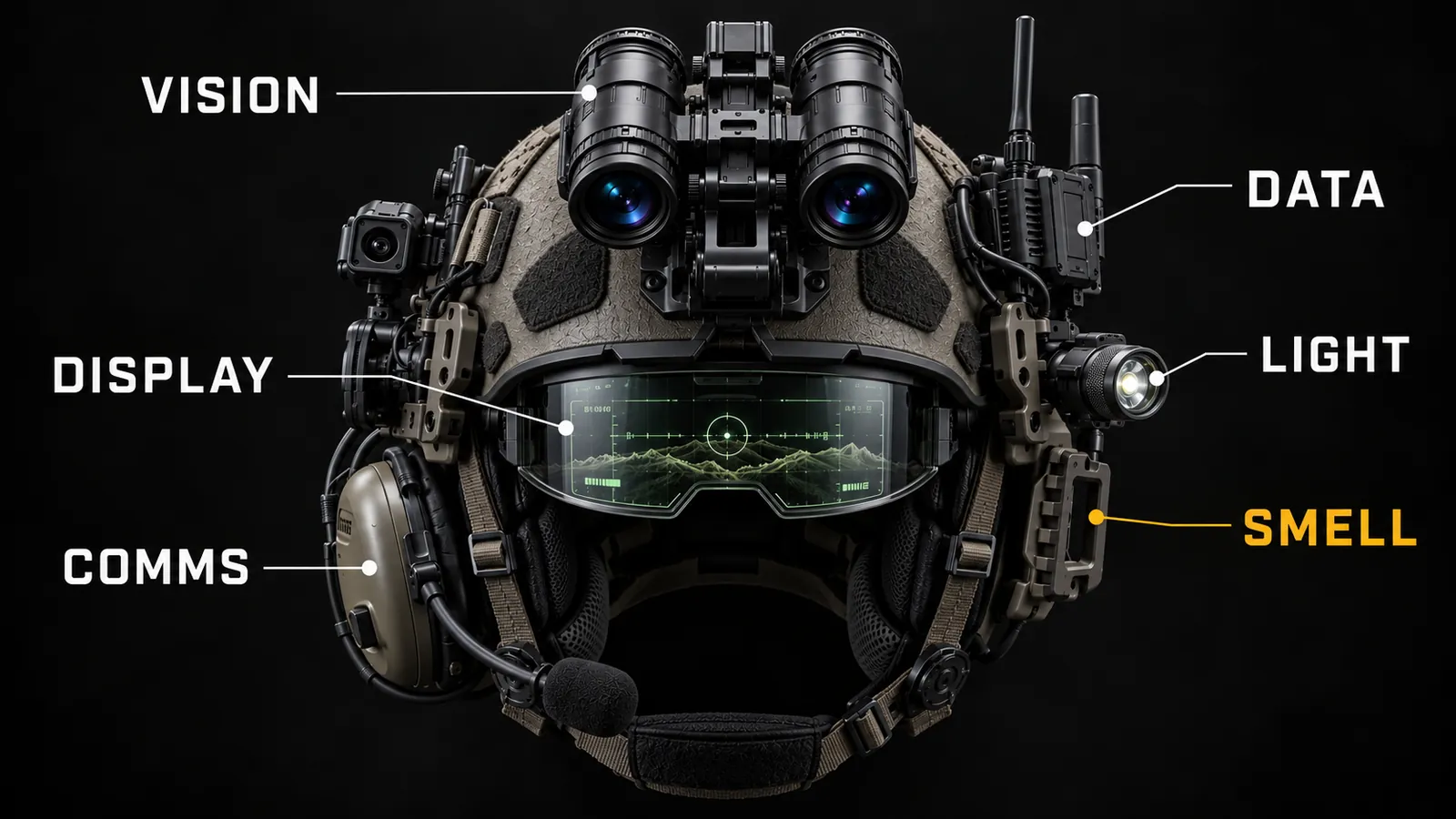
In June 2025, Gentex named NanoAi Technologies as one of ten development partners for its Ops-Core RAILINK system.21 RAILINK is a power-and-data rail for Ops-Core FAST helmets, designed and tested with extensive U.S. military user input.20 Partners sign royalty-free license agreements to build accessories that plug into it.21

In other words, a sense of smell that can ride on a soldier’s helmet.

Gentex built RAILINK so outside innovators could plug new capabilities straight into the soldier’s helmet. NanoAi is one of ten companies chosen to do it.21

The Road In: Before Robots, Operators
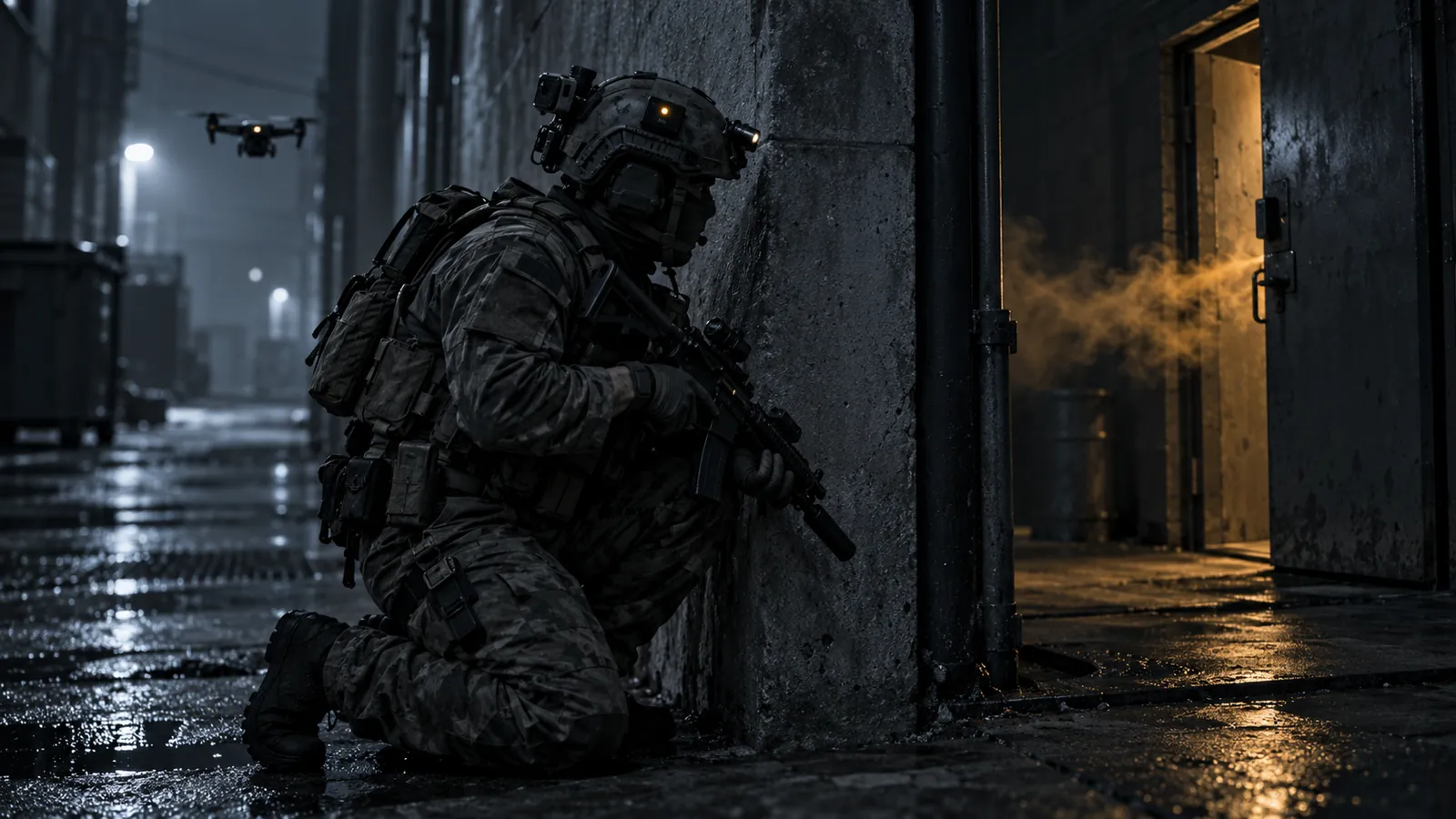
Illustrative image. Not actual field performance.

Gentex has built protective equipment since 1894, and has supplied U.S. Special Operations Command since that command was created in 1987.22,19 RAILINK is the powered rail on its Ops-Core helmet. Accessories on it draw power and share data directly from the helmet.20

In June 2025, Gentex handed royalty-free development licenses to a small group of ten companies.21 Camera makers. Other sensor developers.

And NanoAi. The one that reads the air.

No license fee. No royalty.21

Gentex’s contracts are its own and are cited only to show the scale of the platform; the license confers no entitlement to them. Gentex Corporation of Carbondale, Pennsylvania is privately held and entirely separate from the NASDAQ-listed automotive mirror company of the same name. The license gives NanoAi the right to develop, design, make and test compatible products, and to use, make, offer to sell, sell and distribute them. NanoAi is developing a compatible product for RAILINK but has not yet completed testing, received Gentex approval, or commercialized a compatible product.
The $2 Trillion Race To Build The Digital Soldier

Illustrative image.

The biggest names in technology are pouring billions into the soldier of the future. Meta, Palantir and Anduril alone carry a combined value of roughly $2 trillion.2,3,23

They are building eyes. They are building ears. They are building the brain that connects them.

Not one of the headline programs below is built around a sense of smell.

Anduril: From $14 Billion To $61 Billion In Two Years

No company embodies the new defense economy like Palmer Luckey’s Anduril Industries.

In May 2026, Anduril raised $5 billion at a $61 billion valuation, more than double the $30.5 billion it was valued at in June 2025.2 In 2024 it was valued at $14 billion.2 Reuters has since reported talks at a valuation of up to $100 billion.24

In 2025, Anduril took over the Army’s troubled IVAS soldier headset program from Microsoft. The program, worth up to $22 billion, was renamed Soldier Borne Mission Command.25

In September 2025, the Army awarded Anduril a $159 million contract to prototype Soldier Borne Mission Command.26 A month later, Anduril unveiled EagleEye, an AI-powered helmet and eyewear system that puts a heads-up display, mission command and night vision directly into the soldier’s helmet.27 Anduril’s Lattice software fuses real-time data from sensors spread across the battlefield.27

Anduril built EagleEye with an all-star roster: Meta, Qualcomm, OSI, Oakley and Gentex.27

Meta: A $1.5 Trillion Company Goes To War

Meta, worth roughly $1.5 trillion, has partnered with Anduril to design and build mixed-reality products for warfighters.23,25

The company that spent a decade building AI glasses and VR headsets for consumers is now bringing that technology to the front line. With defense dollars helping fund the work, Meta no longer has to carry the full cost of AR research on its own.25

Palantir: The $450 Billion Brain

If Anduril is building the soldier’s eyes, Palantir is building the military’s brain.

Palantir’s market value hit roughly $448 billion at the end of August 2026, about 55 times its projected 2026 revenue of $8.15 billion.3

In 2025, the U.S. Army awarded Palantir an Enterprise Agreement worth up to $10 billion over ten years, consolidating 75 separate contracts into one.28 The Pentagon has since designated Palantir’s Maven Smart System an official program of record across the military services.29

Maven ingests data from drones, satellites and intelligence reports to identify threats.29 Every sensor on the battlefield is a potential input.

But no system can analyze a scent that was never detected.

Gentex: The Bridge To NanoAi

Here is where the story connects.

Gentex, the helmet maker behind Ops-Core, is Anduril’s helmet and communications partner on both Soldier Borne Mission Command and EagleEye.30

Gentex is also the company that named NanoAi a development partner for its RAILINK power-and-data helmet rail.21

NanoAi is not a partner of Anduril, Meta or Palantir. But it is plugged into the same helmet ecosystem those giants are building on.

One helmet ecosystem

How the story connects

MIXED-REALITYPARTNER HELMET + COMMS PARTNERSBMC + EAGLEEYE RAILINKDEV PARTNER SIGNED TO ACQUIREPENDING CLOSE NO LINK Meta Anduril Gentex NanoAi Intellistake.CSE: ISTK Ops-Core helmet maker The sense
NanoAi is not a partner of Anduril, Meta or Palantir. The only link is Gentex, which partners with both. Acquisition subject to closing conditions. Sources 18,21,25,30.
Who is building the digital soldier

Eyes, ears and a brain. One nose

CompanyValue, bars to scaleSmell?
MetaAI and mixed-reality wearables
~$1.5T
No
PalantirBattlefield data and AI targeting
~$448B
No
AndurilHelmet HUD, autonomy, sensor fusion
$61B
No
NanoAiStandoff chemical detection
~C$17M deal
Yes
Market caps as of Aug 2026 and refreshed on publication; Anduril at its May 2026 round. NanoAi figure is Intellistake's approximate deal price, not a valuation; at true scale its bar is thinner than a hair. NanoAi has no relationship with Meta, Palantir or Anduril. Sources 2,3,18,23.

The soldier’s digital vision is being built with a $1.5 trillion company. The battlefield brain belongs to a $450 billion company. The headset program is led by a $61 billion company.

The nose is being built by a company Intellistake is buying for about C$17 million.

Why This Is The Piece The Whole Race Needs

Here is the part most investors miss.

NanoAi is not building a robot. It is building a sense designed to mount on the robots everyone else is building.20

That means ISTK does not need to win the robot race. It needs the robot race to happen. And Morgan Stanley says that race could put more than one billion humanoids on the planet by 2050.4

ISTK doesn't need to win the robot race. It needs the robot race to happen.

Every patrol robot is a potential mount. Every drone is a potential mount. Every soldier’s helmet is a potential mount.

Follow The Money

The robot race is the headline. The detection market underneath it is already enormous.

The detection market underneath the robot race

Follow the money

US$5T

Morgan Stanley's estimate for the humanoid robot market by 2050.

Morgan Stanley 4
US$13.4B

The Pentagon's first standalone request for autonomy, in a single year.

FY2026 request 13
US$37.82B

Security robots market, forecast for 2031.

Mordor Intelligence 31
US$37.05B

Explosive detectors market by 2035, up from US$11.33B in 2025.

SNS Insider 32
US$250,000

One fully equipped police robot. Without the third sense.

Bloomberg 12
Market figures are third-party estimates with differing methodologies and are not forecasts of Intellistake revenue. The Pentagon figure is a budget request, not an enacted appropriation.

Most of today’s detection is done up close, by swab, by sniff or by hand. Detection at a distance is the open frontier.

Intellistake has signed to step onto it, for about C$17 million in shares.18

Market figures are third-party estimates with differing methodologies and are not forecasts of Intellistake revenue. The Pentagon figure is a budget request, not an enacted appropriation, and covers autonomy and autonomous systems only.

The Deal: Intellistake (CSE: ISTK) Moves To Own The Missing Sense

On August 4, 2026, Intellistake Technologies announced a definitive agreement to acquire 100% of Dallas-based NanoAi Technologies for approximately C$17 million in Intellistake shares.18

The structure is built around performance. Intellistake would issue 34,106,412 shares valued at C$0.50 each.33 Those shares are tied to milestones linked to NanoAi’s future revenue and contracts.18

Intellistake also plans a US$1.3 million bridge loan to fund six months of NanoAi’s corporate and development costs.33 The transaction is at arm’s length and does not include the assumption of NanoAi’s long-term debt.34

The strategy is simple. Intellistake brings the AI and data infrastructure. NanoAi brings the sensor. Together, the companies describe it as a “sensor-to-decision” capability for defense, healthcare and industrial markets.18

Definitive agreement, announced Aug 4, 2026

Built around performance

34,106,412Intellistake shares
×
C$0.50Per share
=
~C$17MFor 100% of NanoAi
Tied to milestones

Shares linked to NanoAi's future revenue and contracts.

US$1.3M bridge loan

Funds six months of NanoAi's corporate and development costs.

Two board seats

Craig Micklich and a second NanoAi nominee expected to join on closing.

What still has to happen

  • Satisfactory due diligence, including verification of NanoAi's intellectual property
  • Completion of the audit of NanoAi's financial statements
  • Intellistake maintaining a minimum cash balance of $2 million
  • No objection from the Canadian Securities Exchange
Sources 18,19,33. The acquisition has not closed.

The Buyer

This is where ISTK matters. Intellistake is an AI and technology infrastructure business that has delivered a production-grade AI agent system under contract.35

A sensor produces a reading. Software turns it into a decision.

Intellistake has not yet deployed its software together with NanoAi’s hardware. The plan is to integrate the two after the deal closes and then move to commercialization.18

The acquisition is pending close. Nothing has shipped. No unit is in the field.

You are reading this before any of that has happened. That is what early looks like.

Built By A Navy SEAL

NanoAi was founded by Craig Micklich, a former U.S. Navy SEAL who served 12 years.19

On closing, Micklich and a second NanoAi nominee are expected to join Intellistake’s board.33

His résumé reads like two careers. After active duty, Micklich mobilized for Hurricane Katrina relief, helping rescue more than 800 people.19 He then held senior capital-markets roles as a managing director at Deutsche Bank and a senior vice president at Morgan Stanley.19

He founded NanoAi in 2018.19

In his own words:

Craig Micklich
“

I have personally overseen extensive testing of this process across multiple environments. The sensor is built on a tiny chip. It is stackable, meaning you can layer multiple sensors to screen for several different threat categories at the same time, in a single device. That is what makes it different.

The peer-reviewed study provided independent validation of what we had already demonstrated through extensive testing, and now the objective is to bring that capability to defense, law enforcement, and critical infrastructure at scale, and ultimately keep us safe from the unseen threats that plague our world.”

Craig Micklich, CEO, NanoAi Technologies · 12-year U.S. Navy SEAL 19

Peer-Reviewed In A Nature Journal

NanoAi’s core sensing science has been published in Scientific Reports, part of the Nature Portfolio, with Micklich as a named co-author.19 The research was conducted with the University of Texas at Dallas and Cleveland Clinic Abu Dhabi.19

In a study of 84 people being screened for COVID-19, the handheld breath analyzer did not miss a single positive case. It achieved 100% sensitivity and 91% overall accuracy.19

Scientific Reports, Nature Portfolio

Breath screening study, COVID-19

84people screened at Cleveland Clinic Abu Dhabi
100%sensitivity: no positive case missed
91%overall accuracy
Infection detection study with the University of Texas at Dallas. Not a test of explosives or narcotics detection. Source 19.

The person who built the sense of smell has stood where it matters most. That is not a lab story. It is an operator’s story.

Beyond The Battlefield

The same sense that protects a soldier could protect a police officer, a border agent and a cargo terminal.

A Crisis On Both Sides Of The Border

More than 50,000 people across the United States and Canada died from opioid overdoses in 2025. That is about 137 every day.36,37,38

In the U.S., synthetic opioids such as fentanyl were involved in about 38,000 of those deaths.37 In Canada, opioids took an average of 15 lives a day.38 In British Columbia, fentanyl was detected in 77% of unregulated drug deaths, and paramedics answered about 108 overdose calls a day.39

Opioid overdose deaths per day, U.S. and Canada, 2025
137

More than 50,000 people across the United States and Canada died from opioid overdoses in 2025. That is about 137 lives every day. Each dot is one of them.

Derived: about 44,564 U.S. plus 5,608 Canadian opioid deaths, divided by 365. Provisional data, subject to revision. Sources 36,37,38.

Behind those numbers are police officers, paramedics and border agents who often walk into a scene without knowing what substances are there. The sooner they know, the better every decision that follows.

The scenarios below are potential applications, not announced products.

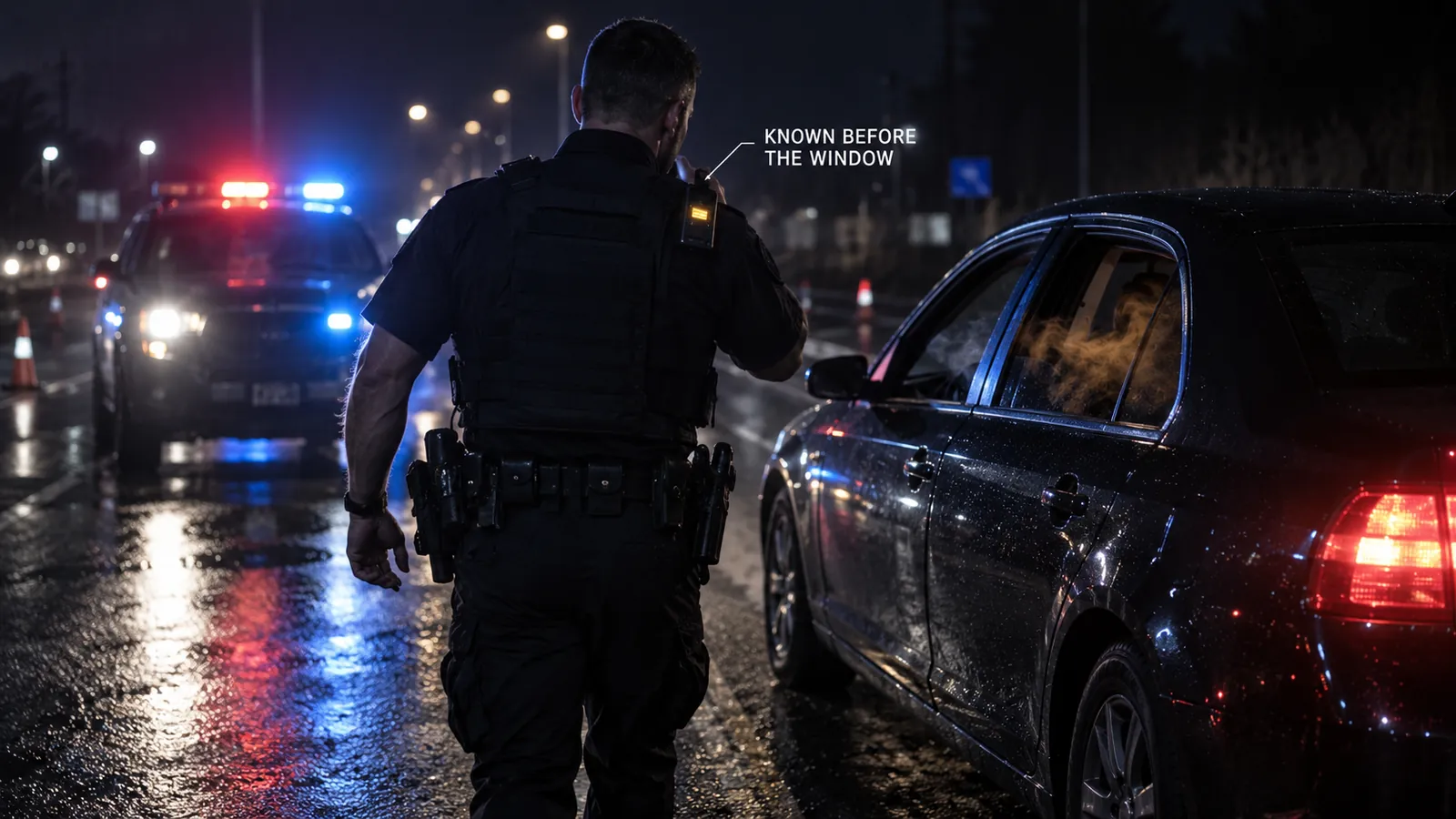
Illustrative image. Potential application, not an announced product.

The traffic stop. The most dangerous part of a traffic stop is the walk to the window. Picture an officer wearing a NanoAi unit. Before he reaches the car, it alerts him to fentanyl inside. He slows down, calls for backup and puts on gloves. He knew before the window, not after.

The border and the cargo bay. A NanoAi unit can be built to screen for explosives, ammunition and narcotics from one platform.20

The robot fleet. Every quadruped patrolling a base and every humanoid entering a warehouse is a potential host. If Morgan Stanley is right about a billion robots by 2050, each one is a body waiting for a nose.4

Healthcare. NanoAi’s 60,000 validation tests came from infection detection, with results in about 30 seconds.18 Intellistake has named healthcare as one of its target markets alongside defense.18

One sensing platform. Many markets. And in every one of them, the incumbent is either a dog, a swab or nothing at all.

Intellistake Technologies Corp. · CSE: ISTK · OTCQB: ISTKF · FSE: E41

6 reasons to watch

1Two giant markets, one missing sense

Robots forecast at $5 trillion by 2050. Defense spending hit $2.9 trillion in 2025. The headline robots cannot smell. 1,4

2The incumbent is expensive

A single TSA screening dog team costs around US$154,000 a year to run. 7

3Built for standoff

Dogs averaged 11 to 18 inches to pinpoint. NanoAi is designed for standoff, with 10 ft testing underway, and mounts on robots and drones. 8,20,40

460,000+ validation tests

On the NanoAi Analyzer for infection detection, with results in about 30 seconds. 18

5A seat on the soldier's helmet

Development partner for Gentex's Ops-Core RAILINK. Gentex is also Anduril's helmet partner. 21,30

6A performance-based deal

About C$17 million in shares, tied to milestones, with a Navy SEAL founder joining the board. 18,33

Where You Are Standing

Illustrative image.

Morgan Stanley: a US$5 trillion humanoid market.4 Musk: 80% of Tesla’s future value in one robot.5 Figure AI: US$39 billion, three years after it was founded.6 The Pentagon: US$13.4 billion requested for autonomy.13 More than 60 bomb squads and SWAT teams already running robots.12

Every one of those robots can see. Every one can hear.

None of the headline humanoids is being sold to detect a bomb in the air.

A peer-reviewed method. More than 60,000 validation tests. A sensor designed for standoff detection, now in testing at 10 feet. A signed license to develop for the Ops-Core helmet platform. A Navy SEAL founder who has stood on both ends of the problem. A device built to clip onto whatever the robot army looks like next.

And a signed C$17 million deal from Intellistake Technologies Corp. (CSE: ISTK | OTCQB: ISTKF | FSE: E41).

Not launched. Not scaled. Not closed. Signed.

The robot army is being built right now. The sense it is missing has a ticker.

Intellistake. CSE: ISTK, OTCQB: ISTKF
CSE: ISTK|OTCQB: ISTKF|FSE: E41
Visit intellistake.com

What Still Has To Happen

Intellistake is an early-stage company and the acquisition has not closed. Completion is subject to customary conditions, including:19

  • satisfactory due diligence, including verification of NanoAi’s intellectual property
  • completion of the audit of NanoAi’s financial statements
  • Intellistake maintaining a minimum cash balance of $2 million
  • no objection from the Canadian Securities Exchange

The share consideration depends on NanoAi hitting future revenue and contract milestones.18 Defense and law-enforcement deployments remain part of the companies’ expansion plans, not completed contracts.34 New applications may require further testing and validation before deployment.19 Results may differ materially from what is described here.

The companies, products, agencies, valuations and markets described here are provided for market context only. They are not forecasts of Intellistake’s performance, valuation or revenue. Intellistake has no agreement with any of them and differs materially in scale, stage and risk. Private company valuations are as reported at the time of the referenced funding rounds. Robotic, drone and other platform integrations are forward-looking and depend on further engineering, integration, regulatory approval and adoption. No procurement contracts or commercial deployments are confirmed unless expressly stated in company filings.

Small-cap securities are speculative and you may lose your entire investment. Do your own research and speak to a licensed advisor.

Sources (40)
  1. SIPRI Yearbook 2026: Military expenditure
  2. Multiples.vc: Anduril valuation history; OC Business Journal: $30.5B 2025 valuation
  3. TS2: Palantir market value ~$447.9B, Aug 31, 2026
  4. Morgan Stanley: Humanoids, a $5 Trillion Market
  5. Fortune: Musk says Optimus will make up 80% of Tesla’s value (Sept 2, 2025)
  6. Reuters via Yahoo Finance: Figure valued at $39 billion in latest funding round (Sept 16, 2025)
  7. U.S. GAO, GAO-16-444T: TSA canine program costs, Table 1
  8. Mejia et al., Scientific Reports (2024): Physical properties of odorants affect behavior of trained detection dogs during close-quarters searches
  9. Shacknews: Tesla Q3 2025 earnings call transcript
  10. Interactive Brokers: Musk’s trillion-dollar pay package approved by Tesla shareholders
  11. TechRadar: 1X NEO home robot pre-orders
  12. Bloomberg via Boston Globe: Boston Dynamics’ Spot is becoming standard in policing (Nov 18, 2025)
  13. DefenseScoop: FY26 budget request for autonomy and unmanned systems (June 26, 2025)
  14. Defense One: Robotic dogs patrol Tyndall AFB
  15. Military.com: Portland Air National Guard robot dog
  16. MeriTalk: Air Guard robot dog, Maj. Jordan Criss
  17. Boston Dynamics: CBRNE threat response
  18. BetaKit: Intellistake to acquire NanoAi
  19. Intellistake news release, Aug 11, 2026: Scientific overview of NanoAi’s detection process (via Stockwatch)
  20. Gentex: Introducing RAILINK
  21. Business Wire: Gentex announces new RAILINK partners (June 16, 2025)
  22. Gentex Corporation: About us
  23. Finhacker: Meta market cap $1.503T, Aug 14, 2026
  24. Reuters report of talks at ~$100B valuation (July 2026), via secondary report
  25. Mixed News: Meta and Anduril jointly developing XR for the US military
  26. Soldier Systems: Anduril awarded contract to redefine the future of mixed reality (Sept 9, 2025)
  27. Army Technology: Anduril unveils AI-powered EagleEye helmets
  28. The Register: $10B, 10-year Army contract for Palantir
  29. Nasdaq: Maven designated program of record; Yahoo Finance: what Maven ingests
  30. Business Wire: Gentex expands partnership with Anduril on EagleEye (Oct 13, 2025)
  31. Mordor Intelligence: Security robots market, 2026 to 2031
  32. SNS Insider: Explosive detectors market, 2025 to 2035
  33. Pulse 2.0: Why Intellistake is buying NanoAi
  34. Startup Researcher: Intellistake to acquire NanoAi
  35. Barchart: Intellistake delivers production-grade AI agent system under PowerBank contract
  36. Reuters: US drug overdose deaths dropped for third straight year in 2025 (CDC provisional data). “More than 50,000” and “about 137 a day” are derived: ~44,564 US opioid deaths + 5,608 Canadian opioid deaths = ~50,172, divided by 365.
  37. Partnership to End Addiction: 2025 CDC overdose data breakdown
  38. CTV News: Health Canada, 5,608 apparent opioid deaths in 2025
  39. The Tyee: BC Coroners Service and BCEHS 2025 data
  40. NanoAi Technologies: 10-foot standoff detection testing in progress. Results not yet released. Public source to add before publication.

Legal disclaimers

PLACEHOLDER. The disclaimer for this campaign is inserted here word for word from the document Gregory provides. Do not publish without it.

Thank you! Your submission has been received!
Oops! Something went wrong while submitting the form.
References
(1)
Global military spending reached a record US$2.89 trillion in 2025, the 11th consecutive year of growth. NATO combined expenditure reached US$1.58 trillion, the highest on record. Source: Stockholm International Peace Research Institute (SIPRI) - https://www.sipri.org/media/press-release/2026/global-military-spending-rise-continues-european-and-asian-expenditures-surge
(2)
Global counter-UAS market: forecast US$12.6 billion (2026), projected US$24.1 billion by 2030. Source: Unmanned Airspace - https://www.unmannedairspace.info/counter-uas-systems-and-policies/global-spending-on-counter-uas-systems-reach-usd12-6-billion-this-year/
(3)
AI and analytics in defense market: estimated US$13.95 billion (2026), projected US$23.5 billion by 2030. Source: The Business Research Company - https://www.researchandmarkets.com/reports/6215080/artificial-intelligence-analytics-in-defence
(4)
Canadian defense funding for sovereign AI, sensor-fusion, and real-time situational-awareness technologies. Source: Department of National Defence, Innovation for Defence Excellence and Security (IDEaS) - https://www.canada.ca/en/department-national-defence/programs/defence-ideas/element/competitive-projects/challenges/reliable-ai-sensor-fusion-for-real-world-missions.html

NanoAi Technologies product and company information sourced from https://www.nanoaitechnology.com/

Disclaimers

This report contains "forward-looking information" concerning anticipated developments and events related to the Company that may occur in the future. Forward looking information contained in this report includes, but is not limited to, all statements in respect of the Company's growth and development, expectations regarding prediction market growth, the operations and business segments of the Company and NanoAi, the functionality of the Company's software, and its benefits, the details of the proposed acquisition of NanoAi, the conditions to completion of the proposed acquisition of NanoAi, the benefits of the acquisition of NanoAi and bridging the gap between emerging decentralized networks and real-world industry adoption.

In certain cases, forward-looking information can be identified by the use of words such as "expects", "intends", "anticipates" or variations of such words and phrases or state that certain actions, events or results "may", "would", or "might" suggesting future outcomes, or other expectations, assumptions, intentions or statements about future events or performance. Forward-looking information contained in this report is based on certain assumptions regarding, among other things, the Company will continue to have access to financing until it achieves profitability; the Company and NanoAi satisfy all conditions necessary to close the proposed transaction; the technology and blockchain industries in which the Company intends to focus its business in will grow at the rate and in the manner expected; the ability to attract qualified personnel; the success of market initiatives and the ability to grow brand awareness; the ability to distribute Company's services; the Company creates strategies to mitigate risks associated with cryptocurrency price fluctuations; the Company remains compliant with all applicable laws and securities regulations and applicable licensing requirements; the Company engages and collaborates with local experts, as necessary, to address jurisdiction-specific matters and ensures compliance with foreign regulations to avoid penalties; the Company addresses any potential cybersecurity threats promptly and effectively; the ability of the Company to develop its technology, acquire customers and have revenue; the ability to successfully deploy the new business strategy as a result of the change of business. While the Company considers these assumptions to be reasonable, they may be incorrect.

Forward looking information involves known and unknown risks, uncertainties and other factors which may cause the actual results to be materially different from any future results expressed by the forward-looking information. Such factors include risks related to general business, economic and social uncertainties; failure of the Company and NanoAi to satisfy all conditions necessary to close the proposed transaction; failure to raise the capital necessary to fund its operations; inability to create strategies to mitigate the risks associated with cryptocurrency price fluctuations; the costs of regulation in the digital asset industries increase to the extent that the Company is no longer generating sufficient returns for shareholders; failure to promptly and effectively address cybersecurity threats; insufficient resources to maintain its operations on a competitive basis; and the actual costs, timing and future plans differs expectations; legislative, environmental and other judicial, regulatory, political and competitive developments; the inherent risks involved in the cryptocurrency and general securities markets; the Company may not be able to profitably liquidate its current digital currency inventory, or at all; a decline in digital currency prices may have a significant negative impact on the Company's operations; the Company's success may depend on the continued involvement of key personnel, including advisors, whose involvement cannot be guaranteed; institutional adoption of decentralized AI infrastructure remains uncertain and may not occur at the pace or scale anticipated; evolving regulatory frameworks, including those related to AI (such as Canada's proposed Artificial Intelligence and Data Act) and prediction markets, may impose additional compliance burdens or restrict certain business activities; valuation figures are based on publicly available market data and internal assessments at the time of the referenced transactions and may not reflect current or future valuations; the volatility of digital currency prices; the inherent uncertainty of cost estimates and the potential for unexpected costs and expenses, currency fluctuations; regulatory restrictions, liability, competition, loss of key employees and other related risks and uncertainties; delay or failure to receive regulatory approvals; failure to attract qualified personnel, labour disputes; and the additional risks identified in the "Risk Factors" section of the Company's filings with applicable Canadian securities regulators.

Although the Company has attempted to identify factors that could cause actual results to differ materially from those described in forward-looking information, there may be other factors that cause results not to be as anticipated. Readers should not place undue reliance on forward-looking information. The forward-looking information is made as of the date of this report. Except as required by applicable securities laws, the Company does not undertake any obligation to publicly update forward-looking information.